


Pressure surges have been known since the existence of pipelines filled with liquids. As early as the 1st century BC, the Roman architect Marcus Vitruvius Pollio expressed dissatisfaction with this phenomenon. Extremely strong pressure spikes could form in the lead and stone pipes of the Roman water supply system, capable of turning even stone blocks into crumbs. To prevent damage, Vitruvius recommended supplying water to the pipes slowly, avoiding the introduction of too large quantities, and reinforcing the pipeline at bends with ties or sandstone masonry.
Recently, the consequences of pressure surges in pipes have become more serious due to increased throughput capacity. For example, on July 4, 2009, in Hamburg, 14 water pumping stations failed due to a voltage drop. The sudden failure of the station pumps caused a pressure surge that spread through the pipeline system like a shock wave and brought it to a critical state. After restoring the voltage and gradually resuming the operation of the stations, the increased pressure in the pipes finally destroyed all previously damaged sections. About 100,000 people living in Hamburg were left without water for many hours.
Damage from voltage surges
The size of autonomous systems is difficult to compare with the scale of the Hamburg water supply system, but the impact of pressure surges in this case is just as serious: pipelines can burst, fastenings and other system elements can break, and pumps and foundations can also be damaged. Unpleasant consequences include costly repairs, equipment downtime leading to production stoppages. In addition, there is a possibility of hidden pipeline damage. Therefore, such systems are equipped with compensators and pressure sensors. However, this may not be enough, since such a combination is not suitable for tracking strong pressure surges and recording data about them.
The cause of pressure surges is a sharp rise in the pressure of the moving liquid due to inertial forces. Since water is practically incompressible, its pressure rises especially quickly. This effect is similar to the impact of a solid object hitting a wall with full force. In most cases, pressure surges are unavoidable, since, regardless of whether liquid or gas flows in the pipes, valves cannot remain closed indefinitely. Thus, the only option is to minimize the strong impact of such surges by installing pressure compensators in pipeline systems.
Unpredictable risks associated with excess pressure peaks
Pressure compensators themselves are an insufficient measure to prevent damage to water supply systems. Although the safety valves of compensators respond to exceeding a certain pressure limit, they act too slowly for surges that can occur within milliseconds. Therefore, it is rational to use a special pressure gauge to monitor the system, for example, the LEO 5 series pressure gauge from KELLER. This device measures pressure at a frequency of up to 5,000 cycles per second, detecting any peak pressure values with high temporal resolution. Using the data analysis function with display of pressure changes over the required number of days, hours, minutes, or seconds, possible causes of pressure surges can be easily studied. For example, in one case it was determined that pressure surges in the fresh water supply system occurred as a result of the fire service operation (see the chart "Measurement of peak excess pressure").
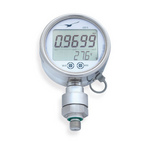
The LEO 5 series pressure gauge from KELLER, part of the latest generation of devices, combines sensor accuracy, fast signal processing with high resolution, recording of peak pressure values, and a memory function with timestamp. All this is enclosed in a durable stainless steel housing with protective glass. The large LCD display makes it easy to read readings in any lighting thanks to 16-millimeter digits and screen backlighting. Capacitive touch keys provide menu navigation.

Effective protection against damage through continuous monitoring
In the special peak pressure analysis mode, the pressure gauge performs measurements at a frequency of 5 kHz with subsequent signal processing by a 16-bit analog-to-digital converter. In the standard measurement mode with precise limit value control, the pressure is measured and displayed twice per second using a 20-bit ADC. The smallest adjustable measurement interval is one second. In total, the memory of the KELLER pressure gauge holds more than 50,000 peak pressure values, including temperature and time data. The device can be connected to a PC via a USB cable for configuration and data download using the free "Logger 5" software. Recorded measurement results can be displayed as graphs, analyzed, and processed.
LEO 5 series pressure gauges are available with various pressure measurement ranges: from 3 to 1000 bar. The total error in the range from 0 °C to 50 °C is 0.1 %FS. Under normal temperature conditions, some pressure gauge models can achieve an error value of ± 0.01 %FS, making them reference instruments.
The LEO 5 pressure gauge can also be equipped with a Bluetooth interface, allowing the device to be used in hard-to-reach places. Parameter configuration and data transfer are carried out via USB or Bluetooth interfaces, and if necessary, a custom software version can be installed using these interfaces.
Flexible and Safe Measurement Technology
The LEO 5 pressure gauge has a high protection class - IP 66, whereas the protection level of industrial systems is usually IP 54 or lower. The interface allows reading current and stored device readings (pressure values, including peak pressure, temperature, measurement intervals). The built-in rechargeable battery charges via USB cable, providing autonomous device operation. The battery charge typically lasts for about a month in standard measurement mode and approximately two weeks in peak measurement mode.
Remote access is also important, especially in the era of Industry 4.0 and the Internet of Things. For such applications, there is an advanced version of the LEO 5 pressure gauge with a built-in LoRa module, providing secure two-way communication.
Thanks to the modular electronics design and serial interface, the system easily adapts to user requests and measurement requirements.
All KELLER pressure gauges can be reconfigured to meet any user-selected standards by adjusting gain and zero point using calibration software.
For example, the device can be adapted to user needs by using special threads, selecting specific temperature and pressure ranges, or modifying the housing or embedded software, facilitating easy integration of the device into the system.
LEO 5 Pressure Gauge:
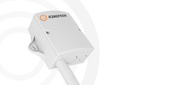
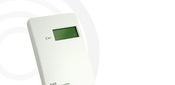
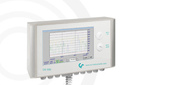
1) standard version; 2) remote version; 3) with Bluetooth interface

Enhancing Safety, Reducing Costs
Pipelines filled with gas or liquid play a key role in industry. Whether they are used for transporting and distributing liquids, for compressed air and hydraulics, or simply for water supply at enterprises, there is always a risk of dynamic pressure fluctuations caused by sudden changes in flow rate due to daily operation.
The LEO 5 pressure gauge ensures safety while saving your resources. You will no longer need to bear the costs of additional testing when standard systems cannot determine the causes of pressure fluctuations, or the significant expenses related to production downtime and equipment repair after accidents caused by pressure surges. You will also have the opportunity to perform maintenance based on the results of peak pressure measurements, which can be useful for predicting possible equipment failure in the near future. That is why the investment in using the LEO 5 pressure gauge quickly pays off regardless of the field of application.

Accessories for the LEO 5 Pressure Gauge: rubber protective cover (shown in the image), transport case, carrying bag, spare batteries, various adapters.
_80x0_e6f.jpg "Pressure Transmitter Series 23SX-H2")
1)_80x0_e6f.jpg "Happy Defender of the Fatherland Day!")
_80x0_c25.jpeg "Radar Level Meter IZMERKON RL 37")