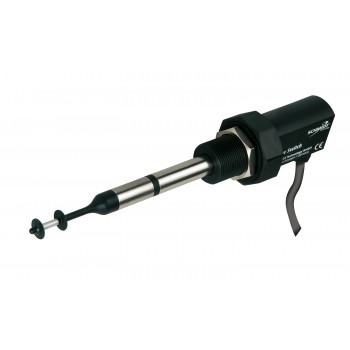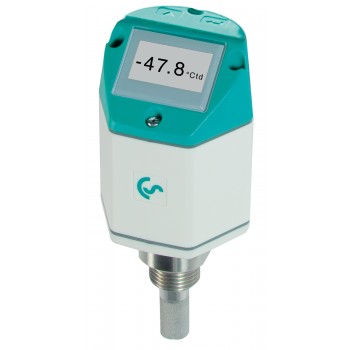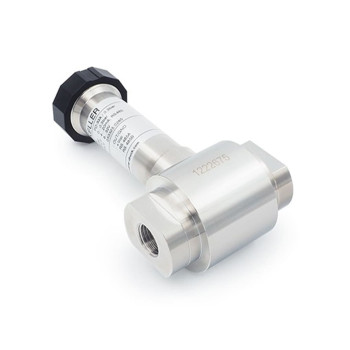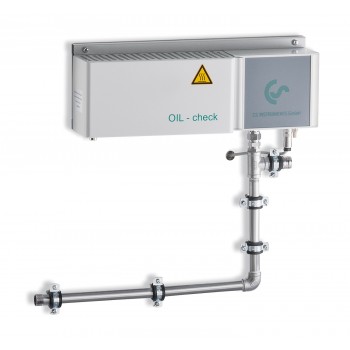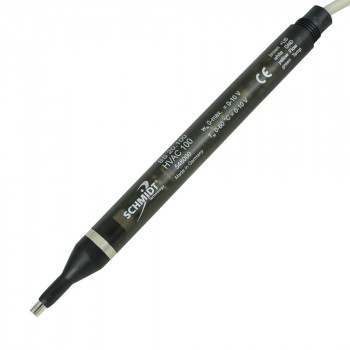



Sensor for monitoring laminar flows with built-in temperature sensor — SS 20.515 LED
 Спецификация SS 20.515 LED
Available on request
Delivery across Russia
Order phone: +7(800)777-18-50
Description
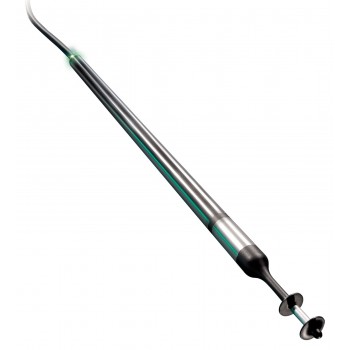
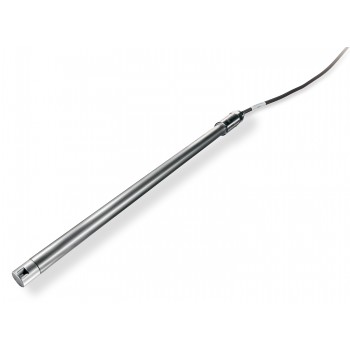
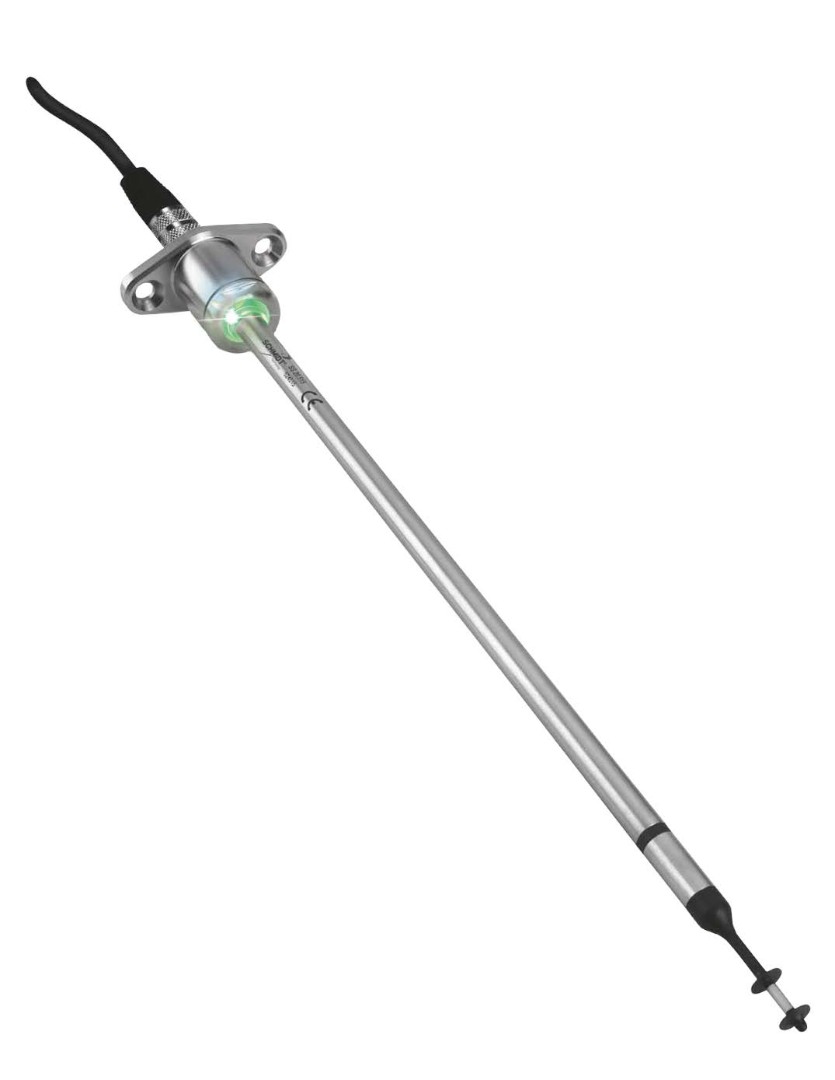
The SS 20.515 LED sensor is designed to monitor the condition of laminar flows in clean rooms. The purpose of directed air flows in clean rooms is to protect products from contamination and eliminate unwanted particles.
To achieve this, it is necessary to ensure a low-turbulence state of the flows and maximum cleanliness of the supplied air. The speed range in which measurements need to be conducted is from 0.36 to 0.54 m/s. In clean rooms, measurements are taken at the filter outlet. Since air recirculation decreases during downtime, accurate flow speed measurements starting from 0.1 m/s are required. According to the EN ISO 14644-3 standard, air speed measurement is performed at a distance of 150-300 mm below the filter surface.
For mounting on the ceiling or wall, the SS 20.515 LED flow sensor is supplied with a special mounting kit for use in clean rooms. The compact size of the flow meter, with all electronic components integrated into a small probe, helps maintain a low-turbulence flow state.
Special mounting options simplify installation in clean rooms, and convenient mounts allow for easy and quick replacement.
Advantages
- Can be disinfected with alcohol or H2O2 (protection against VHP);
- Flow measurement even at minimal speeds of 0.05 and/or 0.06 m/s;
- Built-in device status monitoring and error signal transmission;
- Non-standard length up to 1,000 mm (straight design).
- Specifications
- Overall Drawing
- Connection diagram
- Applications
| Technical specifications of the SS 20.515 sensor | |
| Unit of measurement | speed wN, normalized to standard conditions TN = 20 °C, pN = 1,013.25 hPa |
| Measured media | clean air, nitrogen, other gases on request |
|
Speed measurement range |
0 … 1 / 2.5 / 10 m/s |
|
Max. displayed range wN |
+ 10 % of the measurement range |
| Lower trigger threshold | 0.06 m/s |
| Temperature measurement range | - 20 … + 70 °C |
| Speed measurement accuracy (basic version) | ± (3% of measured value + 0.05 m/s)1) |
| Speed measurement accuracy (precision version) | ± (1% of measured value + 0.04 m/s)1) |
| Reproducibility wN | ± 1.5% of measured value |
| Response time t90 wN | 3 s (step from 0 to 5 m/s) |
| Temperature gradient wN | < 2 K/min at 5 m/s |
| Temperature measurement accuracy | ± 1 K (10 … 30 °C) ± 2 K in the remaining range |
| Operating temperature | -20…+ 70 °C |
| Storage temperature | -20...+85 °C |
| Material of sensitive element | PBT, glass fiber reinforced, stainless steel 1.4571, protective coating (option) |
| Probe material | Stainless steel 1.4404 |
| Connector material | Stainless steel 1.4404 |
| Operating humidity | up to 95 % relative humidity (without condensation) |
| Operating pressure | atmospheric (700 … 1300 hPa) |
| Power supply | 24 VDC ± 10 % |
| Current consumption | standard 80 mA / max. 120 mA |
| Analog output | 0 … 10 V (RL ≥ 10 kOhm) or 4 … 20 mA / max. 21.6 mA (RL ≤ 300 Ohm); short circuit protection |
| Error message | Only with 4 … 20 mA output: 2 mA (according to NAMUR NE43 specification) |
| Electrical connection | M9 connector, threaded, 7-pin |
| Permissible cable length | max. 10 m (voltage output) max. 100 m (current output) |
| Orientation in space | position in downward flow |
| Protection class | IP 65 / III |
| Probe length | Angled version: 270 x 300 mm Straight version: 300 mm or user-defined (up to 1000 mm) |
| Weight | approximately 200 g (angled version) |
1) under standard conditions
Overall drawing of the SS 20.515 sensor (straight version):

Overall drawing of the SS 20.515 sensor (angled version):

| Connector | Pin Number | Designation | Function | Cable Color |
 |
1 | Power | Supply voltage UB | White |
| 2 | Aout Temp | Temperature output data | Brown | |
| 3 | internal | - | Green | |
| 4 | internal | - | Yellow | |
| 5 | internal | - | Gray | |
| 6 | Aout Flow | Flow rate output data | Pink | |
| 7 | GND | Ground | Blue | |
| Shield | Electromechanical shielding | Mesh |
Connecting the sensor with current output:

Connecting the sensor with voltage output:

You may find useful