








Due to the development of high technologies in various fields of human activity, the requirements for consistently ensured quality of the indoor air environment, in which this activity is carried out, are increasing. The parameters characterizing the quality of the indoor air environment can be very diverse - temperature, humidity, pressure, cleanliness. When designing clean rooms, emphasis is placed on those parameters that are fundamental for ensuring each specific technological process.
A clean room or clean space is a room in which the counted concentration of airborne (aerosol) particles and, if necessary, the number of microorganisms in the air are maintained within certain limits. A particle is understood as a solid, liquid, or multiphase object or microorganism with sizes ranging from 0.005 to 100 microns. When classifying clean rooms, particles with lower threshold sizes from 0.1 to 5.0 microns are considered. The key factor is that clean rooms are characterized precisely by the counted concentration of particles, that is, the number of particles per unit volume of air, whose sizes are equal to or exceed a certain value (0.1; 0.3; 0.5 microns, etc.). This distinguishes them from ordinary rooms, where air cleanliness is assessed by the mass concentration of contamination in the air. From this follow the features of maintaining and determining cleanliness indicators, specific requirements for control instruments, particle counters in the air, etc.
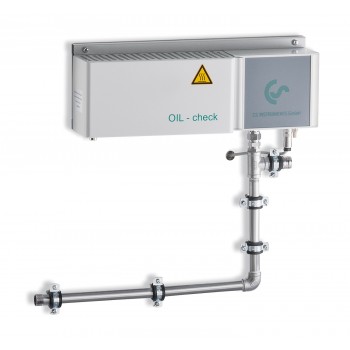
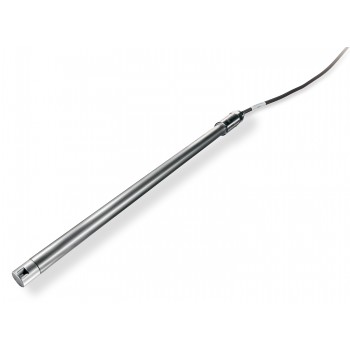
.jpg "Duct temperature and humidity sensor — iMK duct t/RH available for purchase throughout Russia")
.jpg "Wall temperature and humidity sensor — iMK wall t/RH order with delivery throughout Russia")
