





Compressed air used in breathing systems plays a key role in ensuring the safety and health of personnel working in extreme conditions. In fields such as diving and firefighting, air becomes not just an energy carrier, but a vital medium. Monitoring its purity goes beyond equipment protection and moves into the realm of life safety.
Regulatory requirements for air quality
According to GOST R ISO 8573-1, compressed air is classified by three key parameters: content of solid particles, moisture, and oil. The strictest purity classes are applied for breathing tasks. For example, Class 1 requires that the oil content does not exceed 0.01 mg/m³, and the dew point temperature under pressure guarantees the absence of condensate under any operating conditions. Such strict requirements are due to the need to prevent risks to health and equipment.
Technological risks when standards are violated
Neglecting drying and purification requirements leads not just to equipment failure, but a direct risk to personnel life. Let's consider the consequences from the perspective of process physics and safety:
- Cylinder corrosion: Moisture in the air causes electrochemical corrosion of the internal surfaces of cylinders, reducing their strength and potentially leading to rupture. Corrosion products also contaminate air supply systems.
- Biological contamination: A moist environment promotes the growth of fungi and bacteria, which can penetrate the respiratory tract, causing allergic reactions and infections.
- Ice formation: When air expands in the regulator, cooling occurs, which can lead to condensate freezing and blocking air supply.
- Oil mist: Oil aerosols can cause lung diseases and also enhance the toxic effects of other contaminants.
Comprehensive solution for quality control
To eliminate the above risks, the implementation of instrumental control is necessary. Modern sensors allow precise measurement of air parameters in real time.
.jpg)
Humidity control (dew point)
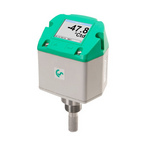
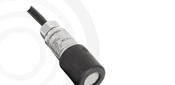
- Dew point sensor FA 510 / FA 515:
- Purpose: Control of deep drying in adsorption dryers.
- Technical feature: The sensitive element is protected from condensate and contamination by a sintered stainless steel filter. Measurement range from -80 to +20 °Ctd fully covers the requirements for Class 1 purity.
- Integration: Availability of Modbus RTU and 4-20 mA current output allows easy integration of the sensor into existing ACS TP for automatic drying process control.
- Dew point sensor with display FA 500:
- Purpose: Local control on high-pressure lines (up to 500 bar).
- Advantage: On-site parameter visualization and presence of a signal relay. The relay can be set to trigger when the humidity threshold is exceeded (e.g., above -40 °Ctd) for automatic activation of a backup dryer or sending an emergency signal to on-duty personnel.

Solid particle control
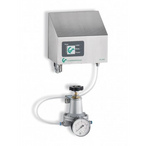
- Optical particle counter PC 400:
- Purpose: Confirmation of purity class by solid particle content.
- Operating principle: The device pumps air through itself at a constant flow rate (28.3 l/min) and uses a laser to detect particles, classifying them by size: 0.1...0.5 µm, 0.5...1 µm, and 1...5 µm.
- Practical value: The device can officially confirm that the air meets Class 1 purity according to GOST.
Oil vapor monitoring
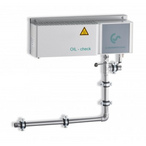
- Oil analyzer OIL CHECK:
- Purpose: Continuous measurement of residual oil content.
- Unique technology: The sensor uses the method of forced pressure variation for automatic auto-calibration. This compensates for sensor drift without using replaceable charcoal filters and without stopping the process.
- Accuracy: The lower detection limit is 0.001 mg/m³, which corresponds to the best global standards and excludes false alarms from the presence of ethanol or other gases.
Organizing a safe breathing circuit requires a shift from subjective control to precise instrumental measurements. Using equipment that complies with GOST ISO 8573 ensures that compressed air in cylinders does not become a health hazard for users. The use of the presented sensors provides reliable monitoring that meets the strictest standards. This is not just regulatory compliance but a direct guarantee of preserving the lives and health of people working in extreme conditions.
Have questions or need advice on selecting equipment? Contact the specialists at «Izmerkon» — we will help find the optimal solution for your needs.
_80x0_e6f.jpg "Pressure Transmitter Series 23SX-H2")
1)_80x0_e6f.jpg "Happy Defender of the Fatherland Day!")
_80x0_c25.jpeg "Radar Level Meter IZMERKON RL 37")


-min_146x146_c23.jpg "Стрелка")