





Pulp production consists of many stages that require strict adherence to technological process parameters. The caustization section is one of the key ones: it is here that sodium carbonate is converted into sodium hydroxide. This chemical reaction is sensitive to temperature and pressure, making the stable supply of saturated steam a critical factor in production.
Any deviations in the heat carrier supply lead to defects or unjustified fuel overconsumption. This problem can be solved by installing a vortex flowmeter, which provides high measurement accuracy in real time.
Why steam control is quality control
The caustization reaction requires a strictly defined amount of heat. In practice, this means maintaining two key parameters:
- Pressure stability. Pressure fluctuations disrupt the reaction kinetics. When pressure drops, the reaction slows down or stops; with a sharp increase, overheating and increased energy consumption occur.
- Measurement accuracy. Measuring steam flow "by eye" or with outdated methods leads to systematic resource overconsumption, which can reach 15–20% of planned values.
Lack of constant monitoring does not allow timely response to system changes and makes the process uncontrollable.
Challenges of the metering unit
The caustization section requires saturated steam supply at 180°C and 6 bar pressure. Target consumption is 1500 kg/hour. During peak loads or changes in the medium properties in the steam pipeline, pressure surges occur. Classic throttling devices (diaphragms) cannot respond quickly enough to turbulence and give large errors. As a result, the technological mode "drifts," and steam is wasted. The operator has to adjust the supply manually, which excludes the possibility of precise dosing.

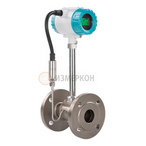
Solution with the Izmerkon VT 470 vortex flowmeter
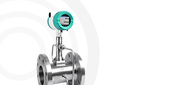
One pulp enterprise faced the problem of steam overconsumption reaching 12% of the norm, and the quality of the liquor could not be stabilized. It was decided to upgrade the metering unit and install a vortex flowmeter IZMERKON VT 470.
The flowmeter operates on the principle of measuring the frequency of vortices formed behind a bluff body installed in the pipeline. The frequency of these oscillations is strictly proportional to the flow velocity. This allows the device to "see" the actual steam flow regardless of changes in its density, temperature, and pressure.
Results of implementation at the site
After integrating the vortex flowmeter IZMERKON VT 470 into the existing pipeline and automating control, the system started working differently:
- Automatic stabilization. The signal from the flowmeter now goes directly to the control valve. As soon as the flow deviates from the set 1500 kg/hour, the valve automatically adjusts its position.
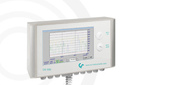
- Data transparency. Flow parameters are displayed on the control panel in real time. The technologist sees not only total consumption per shift but also peak loads.
- Cost savings. In the first month of operation, the specific steam consumption per ton of product decreased by 8%, fully paying off the equipment costs within six months.
Using the vortex flowmeter IZMERKON VT 470 turned the "blind" steam supply section into a fully controlled and automated process.
It is important to remember that every enterprise is unique: the effectiveness of modernization depends on the steam pipeline diameter, current steam parameters, and the configuration of the metering unit. There are no universal solutions — an individual approach is essential.
Engineers at "Izmerkon" are ready to analyze your caustization section and select the optimal vortex flowmeter configuration for your parameters.
Submit a request on the website — and a specialist will contact you to clarify technical details.
_80x0_e6f.jpg "Pressure Transmitter Series 23SX-H2")
1)_80x0_e6f.jpg "Happy Defender of the Fatherland Day!")
_80x0_c25.jpeg "Radar Level Meter IZMERKON RL 37")