The vast majority of ventilation specialists agree: carbon dioxide is an indicator of air quality. A lot of CO2 means there are also many more harmful substances (formaldehydes and other toxic organics, PM2.5, etc.). This makes sense: if the ventilation system cannot handle air exchange, then the exhaled CO2 and the entire "air cocktail" accumulate in the room. So it is quite reasonable to measure the concentration of CO2 in the air to assess the quality of that air.
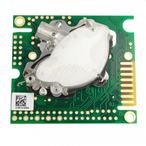
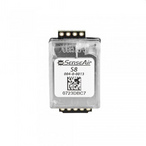
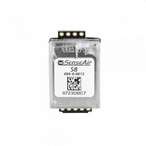
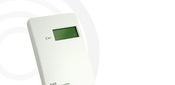
But CO2 sensors are very sensitive. They require annual calibration using a special procedure and special technical gases. However, often it is not necessary to know the exact CO2 concentration. It is enough to assess how much the air quality in residential and office spaces deteriorates during the day compared to at night. This allows evaluating and adjusting the ventilation system's performance to an acceptable level. This possibility is provided by the ABC (Automatic Baseline Correction) algorithm in the S8 and K30 sensors from SenseAir.
How does the amount of CO2 in the air affect a person?
The level of carbon dioxide in the air is measured in ppm: 1 ppm = 0.0001%, that is one millionth. For Russia, 1400 ppm of carbon dioxide in the air is already an unacceptable amount (according to GOST 30494–2011). In America, the general ASHRAE standards (American Society of Heating, Refrigerating and Air-Conditioning Engineers) state: complaints of headaches begin at 2000 ppm.
On average, the picture looks like this:
•300 ppm – normal outdoors in nature
•500 ppm – normal outdoors in a modern city
•700-1500 ppm – normal indoors, with complaints of stuffiness, headaches, lethargy, etc. starting closer to 1500 ppm...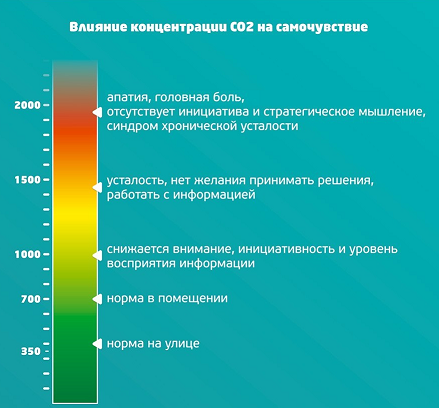
SenseAir ABC Function
All SenseAir sensors are maintenance-free under normal operating conditions thanks to the built-in adjustment algorithm called "ABC" (automatic baseline correction). The adjustment algorithm provides automatic sensor recalibration without the use of technical gases and without the involvement of maintenance personnel. Automatic recalibration ensures acceptable measurement quality for 15 or more years under normal indoor conditions.
How does the ABC adjustment algorithm work?
The adjustment algorithm continuously monitors the CO2 level measured by the sensor and determines the minimum measured value over a certain period. Based on this minimum value, the algorithm gradually corrects the offset of the reference point, set at 400 ppm (0.04% CO2 content), i.e., the assumed fresh air level. Under normal conditions, rooms are empty during non-working hours and the CO2 content equals outdoor levels. The adjustment algorithm assumes that the indoor carbon dioxide level drops to outdoor levels at least once every 8 days. At this moment, the indoor CO2 concentration falls to 400 ppm. Based on this, the reference point position is corrected.
What causes errors in CO2 sensor operation?
Rough handling, improper storage conditions, transportation, and vibrations can affect the accuracy of CO2 level measurements. However, due to the adjustment algorithm, sensor readings return to normal over time.
What happens if the room is used around the clock?
The adjustment algorithm automatically disables if CO2 content deviations become too small. This usually happens in airports, greenhouses, and similar premises and buildings where people are either constantly present or constantly absent. The CO2 content remains roughly at the same level for a long time. In this case, the error will gradually accumulate and after some time the readings will go beyond reasonable limits. The error accumulation time depends on many factors but usually is about 12 months. However, even after this, placing the sensor in normal office conditions for 6 weeks will restore the accuracy of the sensor readings.
What happens if the background CO2 level is above or below 400 ppm?
In these cases, over time the sensor recalibrates and still starts to assume that the background level is 400 ppm. Global studies have shown that the average background CO2 level is indeed 400 ppm, but each locality naturally has its deviations. In this case, the sensor will show distorted data. But this is not as bad as it seems. A person adapts over their lifetime to the background concentration of the area they live in, so a change in CO2 content from 400 ppm to 1400 ppm in one area is subjectively perceived the same as a change from 500 ppm to 1500 ppm by a person accustomed to a background level of 500 ppm.
Thus, it is the change in concentration relative to the background that is important, not its absolute value. A simple example is residents of high-altitude areas who constantly feel unwell in cities. Conversely, city dwellers far from the city, in forests and fields, experience elevated feelings caused by the too low CO2 content in the air.
If you need to see the correct absolute values of CO2 concentration, it is enough to let the controller adjust the sensor to the background CO2 level for 20-40 days and use a certified calibrated meter to correct for the difference between the actual background level and 400 ppm. Thus, with a natural background of 450 ppm, 50 should be added to the sensor readings, and the final readings will correspond to reality in absolute numbers.
How long does the sensor adjustment ensure its operability?
The adjustment algorithm operates continuously in 8-day cycles throughout the device's lifetime. The electronic components are designed to operate for at least 15 years from the date of the controller's manufacture. Therefore, if the sensor is not exposed to an aggressive atmosphere, its readings always remain relevant without any additional maintenance.
Example of the adjustment algorithm in operation
Typically, CO2 content in an office building gradually increases during the workday and decreases at night and on weekends. Therefore, the adjustment period is set to 8 days.
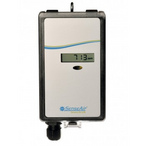
To select sensors and CO2 concentration converters with the ABC algorithm, contact the specialists of Izmerkon company
_80x0_e6f.jpg "Pressure Transmitter Series 23SX-H2")
1)_80x0_e6f.jpg "Happy Defender of the Fatherland Day!")
_80x0_c25.jpeg "Radar Level Meter IZMERKON RL 37")