

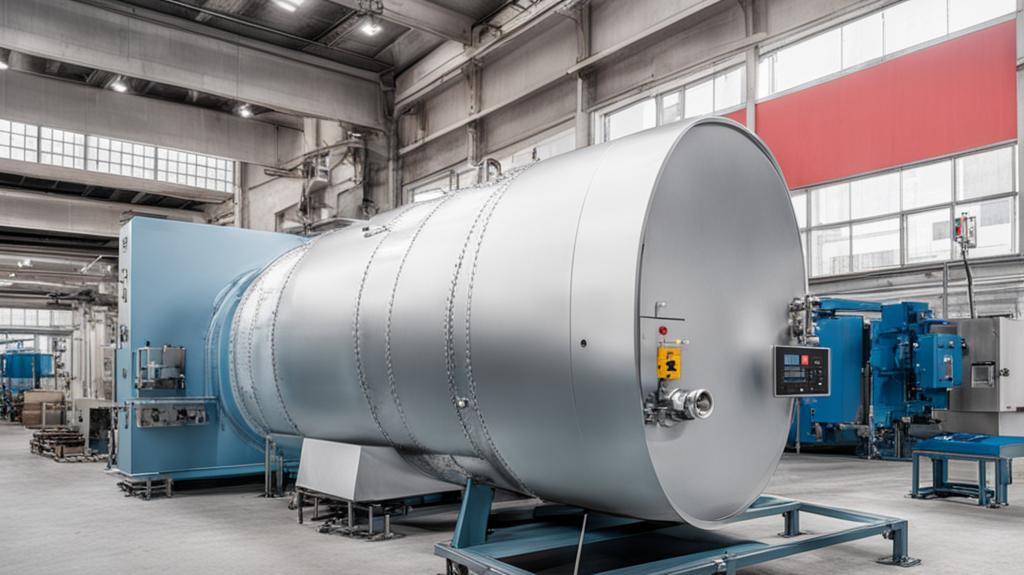
In some cases, pressure sensors must operate reliably under very high temperatures. One such case is sensors in industrial autoclaves – devices used for sterilizing equipment and materials in the chemical and food industries.
An autoclave is a pressure chamber used in various industries for different applications. It is characterized by high temperatures and pressures different from atmospheric pressure. For example, medical autoclaves are used to sterilize equipment by destroying bacteria, viruses, and fungi through exposure to a temperature of 134°C. The air inside the autoclave chamber is removed and replaced with hot steam. The most common method to achieve this is displacement: steam enters the chamber and fills the upper areas, displacing the cooler air to the bottom. There it is pumped out through a drain equipped with a temperature sensor. This process stops as soon as all the air is pumped out and the temperature inside the autoclave reaches 134°C.
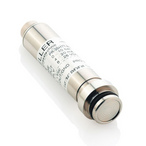
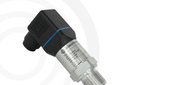
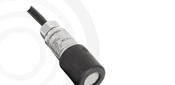
Data obtained from pressure sensors is widely used to control the operation of the autoclave. Since standard pressure sensors are usually calibrated at room temperature, they cannot provide maximum accuracy under the hot and humid conditions of the autoclave. Nevertheless, among Keller pressure sensors, there is a solution specifically designed for use in autoclaves, whether for pharmaceuticals, medical, or food production autoclaves.
Piezoresistive pressure sensors are quite sensitive to temperature. However, temperature errors can be compensated so that devices can be optimized for temperatures encountered in special situations. For example, if you use a standard pressure sensor that achieves 0.1 percent accuracy at room temperature, the device will not be able to provide the same accuracy when used in an autoclave with temperatures up to 134°C.
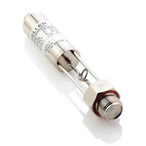
/35xht_1.jpg) Users who need a pressure sensor that maintains high accuracy at high temperatures require a device calibrated accordingly. Calibrating a pressure sensor for specific temperature ranges is not all that is needed for such a complex application as an autoclave, since not only the sensor element but the entire sensor is placed inside the autoclave. Keller engineers have solved this challenge and designed the 35X HT(T) sensor so that the device maintains an accuracy of 0.15% FS despite the temperature of 134°C and high humidity.
Users who need a pressure sensor that maintains high accuracy at high temperatures require a device calibrated accordingly. Calibrating a pressure sensor for specific temperature ranges is not all that is needed for such a complex application as an autoclave, since not only the sensor element but the entire sensor is placed inside the autoclave. Keller engineers have solved this challenge and designed the 35X HT(T) sensor so that the device maintains an accuracy of 0.15% FS despite the temperature of 134°C and high humidity.
The optimal design of a pressure sensor for a specific application depends on many factors. For this reason, a deep understanding of the intended operating conditions is required. Specialists at Izmerkon will select a device tailored to your goals, taking into account the specifics of the final application.
_80x0_e6f.jpg "Pressure Transmitter Series 23SX-H2")
1)_80x0_e6f.jpg "Happy Defender of the Fatherland Day!")
_80x0_c25.jpeg "Radar Level Meter IZMERKON RL 37")