

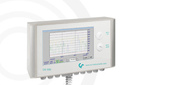

Carbon Dioxide Concentration Sensor
Many ventilation systems, even the most modern ones, are imperfect. They often operate with improper regulation of outdoor air flow. Using high-precision carbon dioxide sensors allows timely determination of CO2 concentration and accordingly adjusting the ventilation performance. This ensures the correctness of microclimatic parameters, important both for personnel and for production processes.

CO2 Sensor Device
CO2 sensors are devices that provide quality monitoring of ambient air and determination of carbon dioxide concentration. Usually, these are sensor devices based on a stable infrared detection method, but there are other options as well.
Carbon Dioxide Concentration Sensor Design
CO2 measurement sensors operate as follows: the amount of light passing through a light filter and absorbed by carbon dioxide is measured (i.e., the intensity of IR radiation before and after absorption by carbon dioxide is measured). The amount of oxygen in the air does not affect the readings or their accuracy in this case.
Such gas analyzers are equipped with receivers with non-monochromatic radiation or light filters, as well as a working chamber. Air for analysis enters the chamber and then the receiver, where the radiation source is located (infrared laser, LED, or heated filament). Carbon dioxide absorbs part of the light rays, and the recorded signal changes. Special filters may also be used in the design.
By design, such metering devices are divided into:
- Stationary, operating with electrical connection: can be installed on the wall, on tables, or on the floor in the working area, or mounted directly in the ventilation duct;
- Autonomous, operating thanks to an external battery;
- Duct-mounted, allowing determination of CO2 concentration in the air duct;
- Compact room sensors, for residential or office premises;
- Carbon dioxide sensors for ventilation, which can be integrated into an automatic supply ventilation control system.
Materials
Devices for controlling the amount of CO2 in a room are supplied in high-strength polymer housings. Usually, standard plastic is used: impact-resistant polycarbonate PC for designs intended for outdoor use, and ABS for those used within normal temperature ranges indoors.
Purpose of Carbon Dioxide Sensors
Such devices are necessary to measure the concentration of carbon dioxide and control its limit values for timely activation of ventilation. They provide control within the range of 0-100%. These sensors are used for:
- climate systems and automatic ventilation;
- microclimate control in rooms where people work, and in production where technological process violations are unacceptable;
- control of carbon dioxide content in the incoming air flow;
- checking the current level and quickly normalizing disturbed gas exchange.
Ignoring elevated CO2 levels indoors is not acceptable. When carbon dioxide accumulates, people's performance decreases, and their overall well-being worsens. Sensors can timely signal microclimate violations, meaning ventilation can be started or the room aired out to promptly correct the situation and prevent further deterioration.
Advantages of Carbon Dioxide Sensors
Modern technological devices are characterized by accuracy, stability, and reliability. They operate on the principle of non-dispersive infrared spectrometry and feature precise measurements. Additionally, among the advantages of these devices are compact size, convenient interface, and attractive modern design. Such devices are stable, operate with high sensitivity, do not require complex settings, and can be integrated into automated microclimate control systems.
Disadvantages of Carbon Dioxide Sensors
The only drawbacks are relatively high cost and increased sensitivity to gas and dust.
Applications of CO2 Sensors
Optical detectors for controlling carbon dioxide content in the air are used in residential, office, commercial, and public premises, including apartments and houses, medical institutions, stores and conference halls, educational institutions (including kindergartens), entertainment centers, and catering establishments.
Additionally, they are in demand in agriculture – in greenhouses, hotbeds, agro-industrial complexes, vegetable storage facilities, and livestock farms.
Features
Carbon dioxide sensors are used to assess the effectiveness of the existing ventilation system. Typically, they are placed in the serviced area at a height of up to 2 meters for convenient reading of readings, and no more than 1 meter from the area where people gather. Devices can also be located in the exhaust collection air duct – so that a sufficient amount of air passes through them. The housing must be carefully insulated during installation.
CO2 controllers have the following operational features:
- Normal operation is ensured at humidity up to 90-95%, so condensation on the surface should be avoided;
- Sensors are sensitive to dust and impacts. Accordingly, their installation location is chosen to minimize these negative factors;
- If the device is installed in an open area where wind and precipitation are possible, it is additionally protected with a shield;
- Regular maintenance is carried out during use, during which the operability of parts is checked and accumulated static electricity charge is discharged;
- The housings are made sealed, so water ingress into the device is difficult. However, operation in damp rooms where condensation occurs is not allowed, as this leads to wire corrosion and loosening of terminals;
- Malfunctions that occur during operation are eliminated by repeated calibrations. The main faults may be related to overheating due to direct sunlight exposure and wetting of live parts (and, as a result, their corrosion).
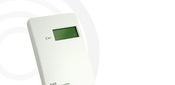
The company «Izmerkon» offers functional and compact CO2 sensors in Saint Petersburg and with delivery across Russia. Here you can select models suitable for automatic climate control systems in buildings, for greenhouses, incubators, production workshops, and vehicles. Such meters, designed for air quality control, are supplied with analog outputs and an LCD display for convenient information reading.
You can find out prices, review models, and buy carbon dioxide sensors in the corresponding catalog section: https://izmerkon.infoliqq.beget.tech/catalog/concentration/
_80x0_e6f.jpg "Pressure Transmitter Series 23SX-H2")
1)_80x0_e6f.jpg "Happy Defender of the Fatherland Day!")
_80x0_c25.jpeg "Radar Level Meter IZMERKON RL 37")


