







Operating principle of robot manipulators
An integral part of automobile manufacturing is the process of painting the body. In the early stages of the automotive industry, the work of coating the body with glossy paint was associated with high time and cost expenditures. The first automatic rotary sprayers were developed in the 1980s-1990s.
The main advantage of automatic rotary sprayers (painting robot manipulators) is the economical use of paint materials: due to the high voltage charge, 90% of the paint is applied to the surface of the body, which allows reducing its consumption. A rotating disc is required for sprayers of this type.
The sprayed paint forms a film on the disc, which becomes thinner at the edges and disperses in the form of droplets, the size of which is regulated by the rotation speed. A sprayer ring is used to direct and shape the paint stream. Thus, the sprayer can operate in any position and can be used for applying coatings both indoors and outdoors. Sprayers of this type are ideal for use in the automotive industry.
Explosion-proof pressure sensors integrated into sprayers
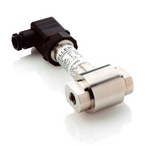
KELLER has experience supplying explosion-proof pressure and temperature sensors to manufacturers of painting robot manipulators used in the automotive industry.
Even considering that non-flammable water-based paint is usually used for painting body parts, the mist formed during spraying can become flammable. Although risks arise only in rare cases during paint spraying, rotary sprayers must include explosion-proof components.
The sensors located in the sprayers measure the pressure of the jet in the system and monitor rapid pressure fluctuations caused, for example, by hose placement. These pressure sensors are in a high voltage field; data transmission between them and the controller is provided by fiber optic cable. Additional pressure and temperature sensors monitor the dosing system and pumps, connecting to the control system analogically via copper wires.
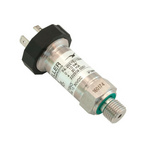
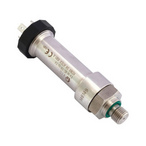
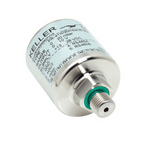
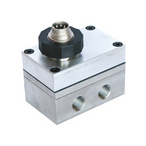
Devices used:

_80x0_e6f.jpg "Pressure Transmitter Series 23SX-H2")
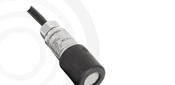
1)_80x0_e6f.jpg "Happy Defender of the Fatherland Day!")
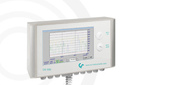
_80x0_c25.jpeg "Radar Level Meter IZMERKON RL 37")