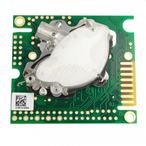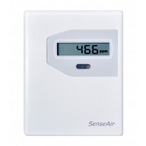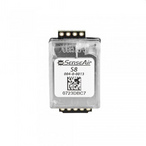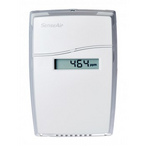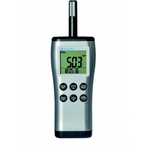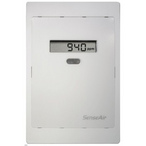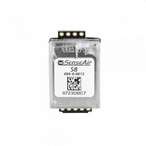





When using NDIR sensors to measure gas concentrations, it is important to understand that accurate measurement occurs thanks to the interpretation of the radiation intensity coming from the light source to the sensor. But how exactly to correlate specific radiation readings with specific gas concentrations throughout the device's service life, considering that the components of NDIR sensors are subject to wear and aging? For this, the sensor needs reference values that will allow it to correctly correlate the data.
There are several practical methods to create more or less stable reference points. In general, these methods can be divided into two groups. Single-beam sensors (for example, the K30 or S8 sensor) compare the obtained radiation intensity data with an external (outside the sensor itself) reference point, such as a calibration gas mixture or data from the SenseAirtm ABC system. Dual-beam sensors have a calibration system built directly into their design. This calibration component can be an additional emitter, an additional detector, or several spectral filters on one detector. Each of these methods has its pros and cons.
Dual-beam sensor with two separate emitters: the main emitter performs continuous measurements, while the second emitter serves as a reference and operates much less frequently (for example, once a day). The idea is that the wear of the reference emitter will be incomparably less than the wear of the main one. Thus, the readings of the reference emitter will serve as a baseline for the sensor. The main emitter operates more than 40,000 times during the NDIR sensor's service life. Correlating the radiation intensity received from the reference emitter with the intensity from the main emitter allows the sensor to compensate for measurement errors caused by aging of the main emitter. In practice, this solution does not completely eliminate measurement errors related to wear, since not only the emitters but also other sensor components are subject to wear. Additionally, incorporating two emitters instead of one negatively affects the device's price, so developers have to compensate for this with lower quality or larger electronic component sizes.

Dual-beam sensor with two separate detectors: one detector records the degree of light absorption by the molecules of the measured gas, while the second, reference detector always measures radiation passing through a special filter that is not absorbed by any gas. Wear of the emitter, optical contamination, and other factors cause differences in readings between the detectors. These data are monitored and correlated at each measurement, allowing correction of the final result. The drawback of this system is that the assumed ratio of received radiation between the two detectors is fixed for the entire sensor lifetime. In reality, this ratio changes over time. It is worth adding that this approach worsens the "signal-to-noise" ratio since the final output power must be divided between two detectors.
 Single-beam sensor is much simpler than the above-described dual-beam designs and does not require potentially inaccurate internal data correlation between two sources. In the case of a single-beam design, the sensor will use only external reference data and thus account for any possible wear or deformation of the device's internal components. During sensor calibration, either an externally supplied reference gas is used, or the device takes the maximum radiation intensity value over a given period as the reference value. This reference value is equated to the CO2 concentration corresponding to pure fresh air, i.e., the lowest carbon dioxide content that can be naturally achieved. When the CO2 concentration in the air matches this reference value, the sensor automatically adjusts its readings to this value, thereby compensating for all deviations caused by deformation of internal components throughout the service life. Single-beam technology offers a simple, elegant, and most effective solution to the problem of quality CO2 concentration measurement over a long period.
 It can be confidently said that in the long term, single-beam sensors are a more efficient and accurate option. However, if you need high measurement accuracy immediately after installation (and are not deterred by a comparatively shorter service life), then you should consider the dual-beam design.
_80x0_e6f.jpg "Pressure Transmitter Series 23SX-H2")
1)_80x0_e6f.jpg "Happy Defender of the Fatherland Day!")
_80x0_c25.jpeg "Radar Level Meter IZMERKON RL 37")