





 |
Galileo Galilei, born in Pisa (Italy), received a patent for a mechanism to pump water from a river for field irrigation. The heart of the pump was a system resembling a syringe. However, the height of 10 meters was the maximum working height of the pump, and the scientist could not find an explanation for this. |
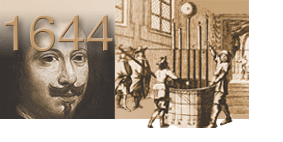 |
Evangelista Torricelli, an Italian physicist and student of Galileo, conducted an experiment in which he placed a one-meter-long tube, closed at one end, vertically into a bowl of mercury with the open end down. The mercury column dropped about 760 mm, leaving an empty space above this level. Torricelli attributed this phenomenon to the "force of the Earth's surface." He called the empty space in the tube a "vacuum." |
 |
Blaise Pascal, a French philosopher, physicist, and mathematician, upon hearing about Torricelli's experiments, began to investigate the causes of the observed phenomena. He found that the force holding the mercury column at 760 mm height was the weight of the air. Thus, on a mountain, this force should be reduced by the difference in air weight between the mountain and the valley at its base. Pascal proved his hypothesis with an experiment at the Puy de Dôme mountain in central France. From the difference in mercury column heights, he calculated the weight of the air. Pascal formulated the principle that this force, which he called "pressure," acts regardless of direction. |
 |
Otto von Guericke, Germany. Torricelli's experiments and his conclusions about empty space and the "vacuum" contradicted the doctrine of an omnipresent God and were negatively received by the Catholic Church. Guericke developed new, more powerful air pumps and conducted the famous Magdeburg hemispheres experiment, in which 8 horses could not separate two hemispheres pressed together after the air was pumped out. |
 |
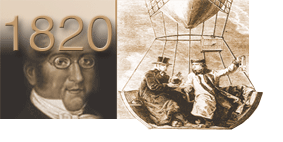
Robert Boyle, a British chemist, used J-shaped tubes to study the relationship between the volume and pressure of gas enclosed in a container and established the relation P*V=K (P – pressure, V – volume, K – constant), which means that if the pressure of a gas at a given volume is known, this pressure can be calculated when the volume changes, provided the temperature and amount of gas remain constant. |
 |
Almost 200 years later, Joseph Louis Gay-Lussac, a French physicist and chemist, discovered that pressure increases in a closed volume proportionally to the rise in temperature. Twenty years later, William Thomson (Lord Kelvin) introduced the concept of absolute temperature with a zero point at -273 °C (0 Kelvin). |
 |
Mechanical Measurement Technologies |
 |
Electrical Measurement Methods |
 |
Deformation sensors were independently developed by E.E. Simmons from the California Institute of Technology and A.K. Rouge from the Massachusetts Institute of Technology. Simmons was more skillful and obtained the patent earlier. |
 |
The first thin-film deformation sensors were designed with a resistor bridge connected to a diaphragm. In such a design, different voltages are observed at the center and edges. |
 |
The connection between the transducer and the diaphragm was always a cause of hysteresis and instability. In the 1960s, Statham introduced the first thin-film transducer with good stability and low hysteresis. Today, this technology plays a major role in the high-pressure sensor market. |
 |
William R. Poyle patented capacitive transducers based on glass or quartz, and Bob Bell based on ceramics a few years later, in 1979. This technology filled the gap for measuring low pressures (since thin-film technology was not suitable for this). Capacitive technology remains a market segment leader in pressure sensors to this day. |
 |
Sensor Era |
 |
Modern sensors typically weigh about 0.01 grams. If an amorphous diaphragm has a known hysteresis, the accuracy value of such a transducer becomes indeterminable by modern means. |
Piezoresistive technology is the most versatile of all. Sensors based on it are applicable for ranges from 100 mbar to 1500 bar absolute, relative, or differential pressure. Its slow adoption is only due to the inability of American companies to design suitable housings.
How Pressure is Measured in 2024
Piezoresistive pressure measurement technology is based on the use of piezoresistors - devices that change their electrical resistance when subjected to pressure.
The operating principle of piezoresistive pressure sensors is as follows: a thin layer of piezoresistive material, such as silicon or polycrystalline carbon, is applied to the surface of the piezoresistor. When pressure acts on the sensor, the piezoresistive material deforms, causing a change in its electrical resistance. This resistance change can be measured and used to determine the pressure magnitude.
Advantages of piezoresistive pressure measurement technology include:
1. High sensitivity: piezoresistive sensors have high sensitivity to pressure changes, allowing precise measurement of its magnitude.
2. Wide measurement range: piezoresistive sensors can operate over a wide pressure range, from a few Pa to several MPa, making them suitable for various applications.
3. Small size and low power consumption: piezoresistive sensors are compact and small-sized, making them convenient for use in portable devices. They also consume little power, saving battery life.
4. Fast response: piezoresistive sensors have a high reaction speed and can quickly measure pressure changes.
Piezoresistive technology is widely used in various fields such as automotive industry, medicine, industrial automation, and more. It allows accurate pressure measurement under different conditions and provides reliable results.
For 30 years, KELLER has been perfecting the technology while maintaining the price level of other, less versatile and less accurate technologies.
_80x0_e6f.jpg "Pressure Transmitter Series 23SX-H2")
1)_80x0_e6f.jpg "Happy Defender of the Fatherland Day!")
_80x0_c25.jpeg "Radar Level Meter IZMERKON RL 37")


