






Measuring the efficiency of compressors is an important aspect in industry, as compressors are used in various fields for compressing air or gases. Compressor efficiency is crucial because it directly affects energy consumption and operating costs. There are several methods for determining compressor efficiency.
.jpg)
The installation location and climatic conditions must be taken into account already during the design of compressed air stations. Large temperature fluctuations, for example, between day and night, lead to uneven compressed air flow.
The choice of the appropriate method for measuring efficiency depends on the type of compressor, available resources, and specific requirements. Efficiency measurement results can be used to optimize operation, reduce electricity costs, and extend the compressor's service life. It is important to perform regular maintenance and monitoring procedures to maintain compressor efficiency and detect potential problems early.
Efficiency can be determined in several ways; below are two examples:
- Isentropic efficiency measurement, which compares pressure and temperature at the compressor inlet and outlet.
- Combination of electrical power measurement with volumetric flow measurement.
Analysis of Specific Compressor Performance
.jpg)
By measuring the consumed power and simultaneously measuring the volume of supplied air, the specific power of the compressor can be calculated. Specific power is calculated as the ratio of consumed energy in kWh to the volume of air supplied during the same period in m3.
Specific power = kWh/m3
The specific performance indicator of the compressor provides information about its condition.
A typical specific power indicator for an oil-filled compressor might be as follows:
Performance: 43.7 Nm3/min (according to ISO 1217), total consumed power: 272.7 kW.
Specific power kWh/m3 = 272.7 kW / 43.7 m3/min = 6.2 kW / m3/min
Challenges
Measuring flow directly after the compressor can be a challenging task in industrial conditions. The most common problems include, for example, high process temperatures and excess pressure, as well as fluctuations in the above parameters. Compressed air contains impurities from the intake air in elevated concentrations, compressed particles, moisture, or oil vapors, which can contaminate or even damage sensor equipment.
Calibration or maintenance of sensors can also be somewhat difficult, as many measuring instruments are hard to mount and dismount due to their weight, design, and handling features. This may require a forklift, other equipment, and more than one helping hand.
Overall, volumetric flow measurement directly after the compressor requires careful planning, selection of appropriate measuring instruments, and reliable installation to ensure accurate and reliable measurements under extreme conditions.
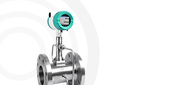
VD 500 - differential pressure-based flow sensor from CS INSTRUMENTS
With the innovative flow sensor VD 500, targeted measures can be identified to significantly reduce the energy consumption of the compressed air system. Located directly behind the compressor, it accurately records volumetric flow, pressure, and temperature and provides precise efficiency measurement of individual compressors. Thus, compressors can be compared with each other during operation and checked whether they really achieve the performance specified in the datasheet..png)
The specific power of the compressor describes the amount of energy required to supply a certain amount of air. It is calculated by dividing the absorbed electrical active energy by the amount of produced air. Thanks to the precise measurements of the VD 500 and the active power meter, you can determine the specific power of your compressed air compressor in real time. Both during a short-term audit over 7 days and during continuous monitoring, determining the specific power allows assessing the efficiency of the installation and identifying any deterioration. Thanks to the built-in display and various bus systems, all necessary measured values are in sight, enabling quick and efficient response to the situation.
Advantages of VD 500
.jpg) VD 500 from CS INSTRUMENTS offers many advantages for the user: thanks to its innovative punch-through design, it can be installed under pressure, and during current operation, it is not necessary to shut off the compressed air supply for the installation. It simply inserts through a standard ½" ball valve and is removed from the line in the same way. Its design is lightweight and compact, so it can be installed by one person without any additional auxiliary tools.
VD 500 from CS INSTRUMENTS offers many advantages for the user: thanks to its innovative punch-through design, it can be installed under pressure, and during current operation, it is not necessary to shut off the compressed air supply for the installation. It simply inserts through a standard ½" ball valve and is removed from the line in the same way. Its design is lightweight and compact, so it can be installed by one person without any additional auxiliary tools.
Other advantages of the VD 500 sensor from CS INSTRUMENTS include its unique sensitivity in the lower measurement range. The sensor's measurement range starts at 2 m/s, thus covering the entire operating range of variable speed drive (VSD) compressors as well as other compressors. At the same time, it is especially suitable for very high flow speeds, up to 224 m/s and 600 m/s respectively.
Additionally, the VD 500 is suitable for high temperatures: up to 180°C with no restrictions. The sensor is also protected against contamination thanks to its special design.
Thus, the VD 500 from CS INSTRUMENTS is a ready-made solution for monitoring and verifying the efficiency of your compressor. It helps calculate compressed air costs, identifies potential savings, and helps save money.
Contact our managers for more detailed information.
_80x0_e6f.jpg "Pressure Transmitter Series 23SX-H2")
1)_80x0_e6f.jpg "Happy Defender of the Fatherland Day!")
_80x0_c25.jpeg "Radar Level Meter IZMERKON RL 37")


_146x146_c23.jpg "Стрелка")


