


Extensive testing is necessary for the development of new technologies. To achieve reliable results, measuring instruments that precisely meet the requirements are needed. We will tell you which factors play the main role here.
Pressure Range
The starting point in the search for a suitable measuring technology is the measured pressure range and the expected measurement of relative or absolute pressure.
Depending on the application, special functions must be taken into account. In particular, in testing and measuring tasks, separate measurement ranges are required that standard sensors with ISO pressure ranges cannot provide. In this case, sensors are needed that display the corresponding pressure range and thus achieve the required accuracy.
Accuracy
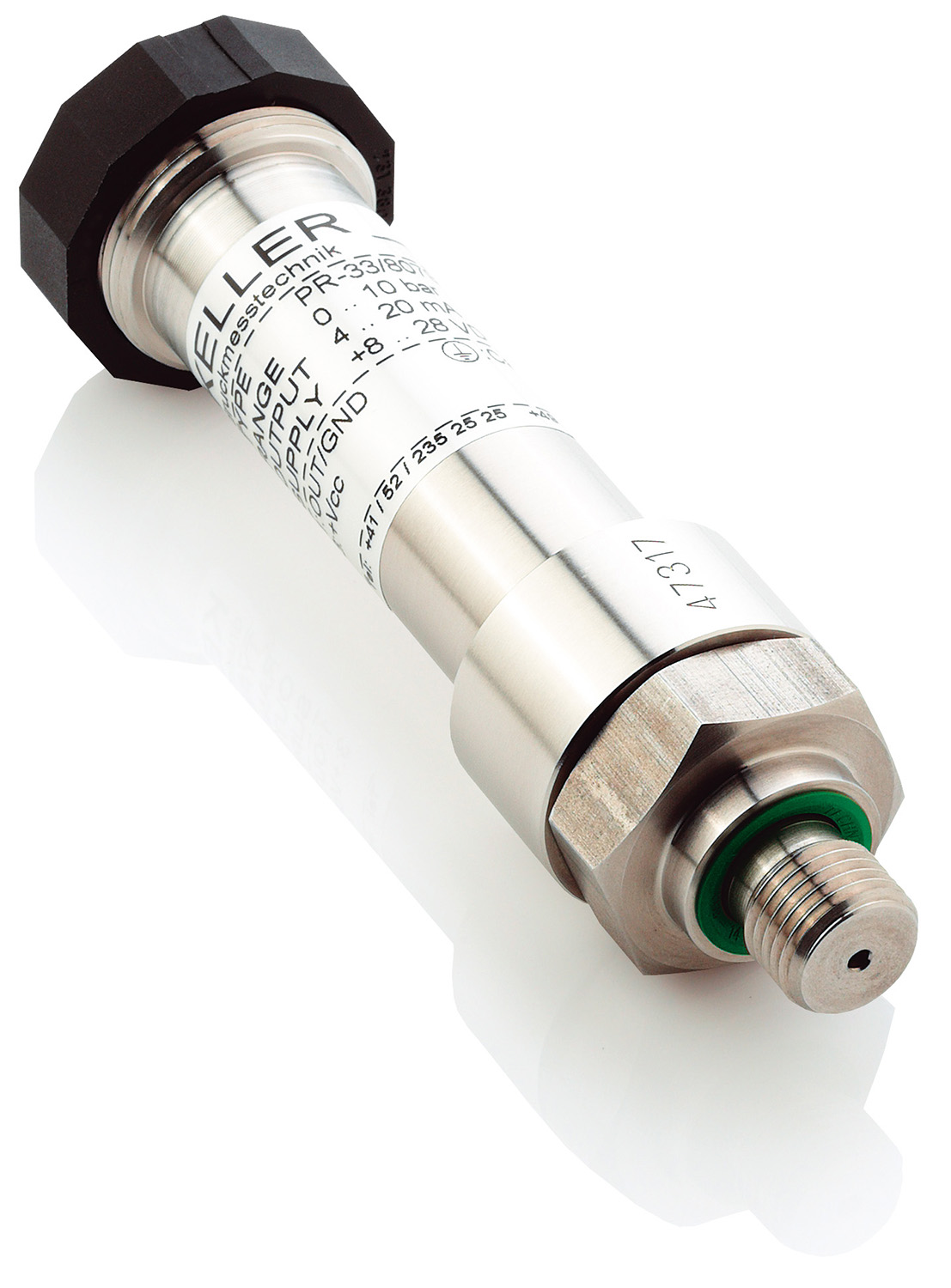 In the development of engines for racing cars, the most important thing is to record even the slightest changes in readings. These are the decisive moments between victory and defeat on the track. In this case, maximum accuracy is required, and in specific situations, developers will prefer a sensor with an accuracy of ± 0.025%, for example, such as the 33X.
Regarding accuracy, the factors of its necessity and product cost are directly related. The pressure measurement range that needs to be measured is usually the basis for decision-making. Those who still decide to use the most accurate sensors should know that this accuracy will come at additional cost.
Temperature
The temperature factor is sometimes difficult to determine. Developers often do not fully realize in which temperature ranges the pressure sensor is used, which must ensure its service. For example, many Keller pressure sensors are optimized for operating temperatures from -30 °C to 100 °C. Thus, common application areas are covered. In principle, all sensors can be optimized and ordered in a special temperature range, so that even at temperatures of -40 °C or +150 °C, accurate results can be achieved.
Process Connection
The topic of process interaction can quickly become an exclusion criterion for developers, as many companies use standardized connections. An important factor here can even be the place where the sensor must be installed. There are many additional electrical connections, whether M12, DIN, MIL, or others, offered by various manufacturers.
Keller provides a wide range of connectors. Many connection options are possible thanks to the modular design of these measuring instruments.
Output Signal
 The question of what form the measured pressure should be converted into is also decisive. The choice here is not small either: analog signal or digital interface, Modbus, I2C. When transmitting an analog signal (for example, in sensors of the 23 and 25 series), the pressure is converted into a signal that still needs to be measured. When transmitting a digital signal (in sensors 33X or 41X), the measured pressure value is directly expressed via the interface.
Space Requirements
In various applications, only limited space is available for mounting pressure sensors. For this reason, the size of the sensor combined with the available process interfaces can become an important selection criterion. Pressure measurement also plays a role here. Piezoresistive pressure sensors are especially suitable for miniaturization. For this reason, Keller can offer sensors with diameters of only a few millimeters (for example, the transmitter M5HB or sensors M5 and 2Mi).
Materials
Where will the sensor be installed? What environmental conditions will it encounter? Will it come into contact with steam, gasoline, or specific gases? The housing material determines which medium the sensor will be exposed to. Stainless steel housings are mainly used for test bench applications. When in contact with salt water, the material choice shifts to titanium. By default, all Keller pressure sensors are made of 316L stainless steel, but some models, such as 33X or 35X HTC, can be made of Hastelloy or Titanium.
The sealing material also has a significant impact on the appropriate sensor. The sealing material depends on the fluid and temperature used in the pressure system. These must be clearly known.
Certificates
 When used in explosive environments, certain certificates are required that provide information about the safe operation of the devices. All Keller pressure sensors are registered in the measurement instruments registry of the Russian Federation and the Republic of Belarus. Among Keller’s level and pressure transmitters, there is a wide range of transmitters for use in explosive atmospheres. Possible explosive zones for pressure transmitters, categories, and groups of explosive gas and vapor mixtures with air – in accordance with the requirements of the Customs Union Technical Regulation TR CU 012/2011 "On the safety of equipment for operation in explosive atmospheres." Explosion protection marking: 0ExiaIICT4/T5/T6 (intrinsically safe circuit) and 1ExdIICT4/T5/T6 (explosion-proof enclosure). Intrinsically safe circuits are equipped in devices such as 23 SY Ei and 33X Ei. Explosion-proof enclosures are available for sensors 23 Ed and 33 Ed).
Delivery Time
Long delivery times can delay prototype testing and ultimately jeopardize product launch. Therefore, it is advisable to determine in advance whether the required sensors are available or what delivery time is expected for custom manufacturing.
Conclusion
Sensors may not always meet the required specifications. In some cases, the required sensor from one manufacturer is not available in a standard version for another company. This can lead to significant additional costs. Delivery times may also be correspondingly delayed.
To make choosing the right sensor as easy as possible for customers, our pressure gauges are based on a modular principle. This means that all our pressure sensors can be calibrated to the required temperature range. Our products are also exceptionally flexible in terms of technological interaction, sealing materials, and pressure measurement ranges. Thanks to the modular design, our sensors can be delivered in the required configuration with minimal lead time.
Go to the Keller catalog
_80x0_e6f.jpg "Pressure Transmitter Series 23SX-H2")
1)_80x0_e6f.jpg "Happy Defender of the Fatherland Day!")
_80x0_c25.jpeg "Radar Level Meter IZMERKON RL 37")