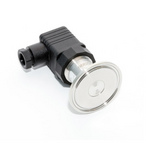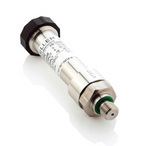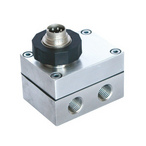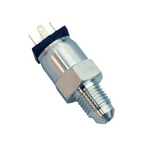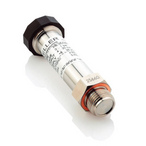
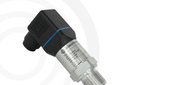
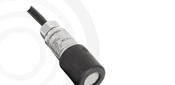
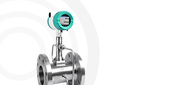



 Pressure, this most important physical quantity after temperature, is decisive in many technological processes.
Pressure transmitters are designed for measuring and continuously converting pressure into a standardized output signal of direct current, voltage, or a digital signal.
Sensors are used in controllers and other automation devices in automatic control, regulation, and management systems of technological processes in water treatment, heating, ventilation, and air conditioning systems; hydraulic systems, refrigeration equipment, flow meters and counters; diesel engines; braking systems; level meters, test benches, etc.
Industrial measurements and control and measuring instruments are used in all areas of industry — from nuclear to food and pharmaceutical; accordingly, pressure transmitters and level transmitters are needed everywhere.
The principle of operation of sensors is based on the elastic deformation of the sensitive element (sensor), on which semiconductor strain gauges are applied, connected in a Wheatstone bridge circuit. The measured pressure is supplied through a fitting into the working cavity of the sensor and causes deformation of the diaphragm. This leads to a change in the geometry of the resistors, which are in close mechanical connection with it, and a change in their resistance. The applied pressure (mechanical input) is converted into a change in resistance (electrical output).
We offer the following algorithm to correctly select a sensor for your application:
1. Type of measured pressure
 Pressure transmitters measure the difference between two pressures acting on the measuring membrane (sensitive element) of the sensor. One of these pressures is the measured pressure, the second is the reference pressure, that is, the pressure relative to which the measured pressure is counted. Depending on the type of reference pressure, all sensors are divided into the following types:
Almost all our pressure transmitters have modifications for measuring both absolute and gauge (including vacuum) pressures. You can learn more in the products/pressure transmitters section.
Absolute pressure transmitters
Designed to measure the magnitude of absolute pressure of liquid and gaseous media. The reference pressure is vacuum. The air from the internal cavity of the sensor's sensitive element is evacuated. For example, a barometer is a special case of an absolute pressure sensor.
The minimum absolute pressure range available for order with an accuracy of 0.1% FSO is 0…50 mbar (0…5 kPa). You can see the description of the 41X sensor here.
Gauge pressure transmitter
Gauge (relative) pressure transmitters are designed to measure the magnitude of gauge pressure of liquid and gaseous media. The reference pressure is atmospheric; thus, one side of the membrane is connected to the atmosphere.
Differential (difference, drop) pressure transmitters
Designed to measure the pressure difference of the medium and are used to measure the flow of liquids, gas, steam, liquid level. Pressure is applied to both sides of the membrane, and the output signal depends on the pressure difference.
Our range includes sensors
- PD-33X — distinguished by high accuracy in measuring pressure difference, as well as the possibility of versions for reference pressures up to 600 bar. At the same time, the measured differential can be as low as 0…0.2 bar
- PRD-33X — these sensors are unique in their ability to withstand pressure overloads from both positive and negative sides. With a measurement range of 0…0.350 mbar, the overload can be 35 bar!
- PD-39X — these pressure sensors have a special design with two absolute pressure sensors. This provides increased reliability and resistance to overloads, but these sensors are only applicable when the pressure difference is of the same order as the reference pressure in the line.
- PD-41X — these are ultra-sensitive sensors for measuring pressure difference. The minimum range is 0…0.5 kPa. This is an ideal solution for measuring low flow velocities. The PD-41X differential transmitter is suitable only for non-aggressive gases.
 Hydrostatic pressure transmitters (level transmitters)
Designed to convert the hydrostatic pressure of the monitored medium into a direct current signal. They measure the pressure of the liquid column, which depends only on its height and the density of the liquid itself. Changes in atmospheric pressure are compensated by means of a capillary (breathing tube)
Vacuum Pressure (Vacuum Gauge) Transmitters
Designed to measure the magnitude of vacuum pressure in liquid and gaseous media. The reference pressure in these sensors is also atmospheric. However, unlike overpressure sensors, the measured pressure is less than atmospheric, i.e., there is a vacuum relative to the atmosphere.
Overpressure-Vacuum Transmitters
These are a combination of overpressure and vacuum pressure sensors, i.e., they measure both pressure and vacuum, for example -1…6 bar. You can order absolutely any such range within the maximum measurement range of a specific sensor from us.
2. Sensor Operating Medium
For reliable sensor operation, it is necessary to select materials for elements in contact with the measured medium (diaphragms, flanges, cables, and sealing rings) that are chemically resistant to these media. For example, for various operating media, the diaphragm material of sensors can be stainless steel, titanium, titanium alloy, Hastelloy, ceramic, Kynar, etc. Cable material is especially relevant for submersible hydrostatic pressure sensors. Polyethylene PE cable is ideal for drinking water, polyurethane PUR for non-aggressive industrial media. If you plan to use the sensor in fuel or aggressive liquids, the optimal solution would be thermoplastic elastomer (Hytrel) or Teflon (PTFE). We use and offer all these materials in our Keller sensor modifications.
3. Climatic Version
Pressure transmitters also differ in climatic design. Attention should be paid to the climatic conditions (ambient temperature, humidity, direct exposure to water and sunlight) at the sensor installation site. They must correspond to those for which it is designed. It is very important to distinguish between two temperatures that can affect our sensor: ambient temperature and the temperature of the measured medium. Our pressure transmitters can operate in ambient and measured medium conditions from -55 to 150°C. Special versions of pressure transmitters can operate at medium temperatures up to +300°C.
4. Output Signal
Let's consider the main types:
- Analog output signal. At the sensor output, we have a continuous linear current or voltage signal, which can be recorded by the simplest instruments, even a regular household multimeter. 4…20 mA is the most common output signal for sensors worldwide; other popular analog signals include 0…10V, 0.5…4.5V, and others.
- Digital output signal. Today, there are many different digital signals, and we will not dwell on them separately. Perhaps the most widely used is the RS485 interface with MODBUS protocol. This is an open protocol that allows combining up to 128 devices into a system with a maximum distance between them of 1300m.
- Ratiometric output signal. This signal is still used quite rarely, especially in our country, but it is gaining popularity every day. The feature of the ratiometric output signal is the dependence of the signal value on the supply voltage. That is, we can say that this signal is dimensionless and represents nothing other than the percentage ratio of the supply signal. Usually, a sensor with a ratiometric output signal is described as 0.5…4.5V ratiometric; in fact, 0.5…4.5V is only achieved with a stable 5V supply voltage, so it is physically correct to say: 0.5V/5V…4.5V/5V. If the supply voltage changes, the output signal changes proportionally.
The type of output signal primarily depends on the existing equipment and the task at hand. For this, it is necessary to study the inputs of the controllers, instruments, machines, or regulators used. We use all the listed signals in our pressure sensors, as well as many others.
For autonomous devices, we recommend using sensors with a digital I2C interface; you can learn about these sensors here. If you find it inconvenient to work with a digital output, it is better to use sensors with a minimum supply voltage, for example, 3.5V — these are the 33X sensors or 5V — these are the 21Y sensors.
5. Measurement Accuracy
Pressure transmitters have various metrological characteristics (accuracy classes) — usually from 0.05% to 0.5%. Highly accurate sensors are used at important facilities in various industries. Optionally, the 33x series sensors can have a basic error of up to 0.01% FSO (available only for ranges >10 bar).
The figure shows a sensor without temperature compensation and with temperature compensation carried out by special algorithms via a microprocessor in Keller pressure transmitters.

Special attention should be paid to the stability of pressure sensors. Even a very accurate sensor, after several hours of operation under temperature cycles over a wide range, begins to give an additional error of more than 0.5% FSO. Imagine if these cycles continue for months or even years!
Some types of pressure sensors have explosion-proof designs. These models can be successfully used to measure pressure in hazardous environments with the presence of explosive and easily flammable gases and liquids. The Keller product line includes both intrinsically safe circuit transmitters and transmitters with explosion-proof housings.
Pressure transmitters belong to measuring instruments and must undergo mandatory certification tests. After that, they are approved and entered into the State Register of Measuring Instruments.
We hope this material will help you better navigate when choosing pressure transmitters.
You can also select a solution that is specifically relevant to your task with the help of our specialists. You can submit a request for selection in any way convenient for you: through the feedback form, by email at office@izmerkon.ru, or by phone at 8 (800) 777 18 50.
_80x0_e6f.jpg "Pressure Transmitter Series 23SX-H2")
1)_80x0_e6f.jpg "Happy Defender of the Fatherland Day!")
_80x0_c25.jpeg "Radar Level Meter IZMERKON RL 37")