
Kololo Game Reserve is a lodge located near the town of Vaalwater in the Limpopo province (South Africa) with a room stock, a fine restaurant, and a swimming pool.

Kololo is part of the Welgevonden reserve, home to members of the "Big Five." Overall, Kololo is an excellent place for family vacations with access to wildlife. The Kololo lodge is located in a rural area, and therefore is self-sufficient in water and electricity. Although Kololo is connected to the power grid, outages occur periodically, so a diesel generator is used as a backup power source.
Kololo Lodge Water Supply System
The Kololo water supply system consists of three parts: a well, eight storage tanks, and a system of pipes and hoses to supply water to the villas, restaurant, and pool.
The main water source at Kololo is a 100-meter deep well. Access to water is provided by a drilled borehole. Measuring the water level in the well is an important measure for forecasting the amount of stored water, as the supply is not infinite. Water from the well travels 1 km to eight tanks, each with a capacity of 5,000 liters. The tanks, named after the manufacturer "Jojo," are located on a high hill. Essentially, the Jojo tanks act as storage from which water flows by gravity through pipes to the villas and pool.

Water Level Measurement
 Measuring the water level both in the well and in the tanks is necessary to obtain information about the current water reserve status and its condition over a certain period. Therefore, in February 2020, KELLER installed a complete water level measurement system in one of the tanks, with data transmitted via LoRa wireless technology. All Jojo tanks are interconnected, so the water level measurement results in one tank are representative for all tanks.
KELLER offers a wide range of both digital and analog level transmitters. In addition to measuring standard parameters such as level and temperature with digital sensors, conductivity data can optionally be obtained. Since all data is stored in the KOLIBRI Cloud database, access is available at any time after measurements, providing an overall view of consumption, leaks, etc.
How is Water Level Measured Using a Pressure Transmitter?
 When diving to depth, you can experience ear pain. This effect is explained by the load related to the pressure of the water column above. The weight of the water column is the force of gravity, calculated by the formula F = m x g, where m = mass and g = acceleration due to gravity. Since pressure is force applied per unit area, a pressure sensor can measure the height of the water column.
With the liquid density value, pressure can be converted into length (water column height), and having this parameter along with area and density data, pressure can be converted into volume in liters.
System Based on LoRaWAN Wireless Technology
Kololo is not the largest reserve, but its area is 3,000 hectares (i.e., 4,500 football fields), which is too large for sensors with wired connections. Such a project requires a wireless solution - IoT* technology, but in the rural area where it is located, cellular coverage is almost nonexistent, making 4G and NB-IoT unavailable. However, Kololo has internet access.

LoRaWAN (Long Range Wide Area Network - low-power global long-range networks) is a communication protocol for wireless systems (in particular, for IoT) with low energy consumption. The data transfer rate is up to 50 kbps, making this technology suitable for transmitting simple data types, such as sensor readings (unlike, for example, HD video transmission). LoRaWAN has a range of several kilometers and penetrates buildings.
There are several technologies for wireless IoT* networks, such as LoRaWAN and Sigfox. The most well-known LoRaWAN providers are Loriot and The Things Network (TTN).
A major advantage of TTN is the ability to create local coverage by installing a TTN-compatible gateway and connecting it to the internet.
A standard local LoRa network consists of three main elements:
1. Sensor (digital) or manometer
2. Data transmitter with LoRa module
3. LoRa gateway, a station with internet/Wi-Fi connection, through which measurement results are sent to the KOLIBRI Cloud storage.

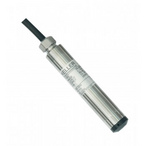
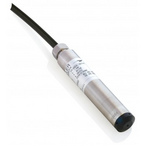
At Kololo, the LoRa gateway used is the Laird Sentrius gateway and transmitters from KELLER ADT1. Digital level sensors from KELLER series 36XW, which measure pressure (water level) and temperature, are connected to the ADT1 transmitters.
The ADT1 transmitter receives level measurement values from the sensor and transmits the data along with barometric pressure and air temperature readings to the LoRa gateway.
*Internet of Things: a virtual network of devices designed to interact with each other and with humans. Information obtained from sensors, converters, software, as well as data entered by the user, is transmitted to the network and used to optimize specific situations. Examples of IoT technology use include smart enterprises/smart homes and Industry 4.0.
The final stage is the forwarding of data via the internet by the LoRa gateway to the KOLIBRI Cloud storage, where it is stored.
The KOLIBRI Cloud web application allows viewing data and also enables further processing, such as exporting, printing, converting to other units, various calculations, and much more.
Installation

Step 1. Installing the LoRa gateway in the technical specialist's office and registering with the TTN (The Things Network) provider.
Step 2. Receiving LoRa at the measurement site to check the connection of the ADT1 modem with the LoRa gateway. When the gateway is correctly connected to the ADT1, reliable transmission of level meter measurement results via the internet to the KOLIBRI Cloud storage is ensured.
Step 3. Configuring, registering, and connecting the ADT1 to the TTN network.
Step 4. Connecting the level meter PAA-36XW to the ADT1 modem and installing it in the tank.
 Installation and setup took some time because it was necessary to precisely determine the correct transmission power without overload.
Under such conditions, it is problematic to return for battery replacement. After installation and setup, the system began taking measurements every hour.
The next day, the data became available for viewing as a descending graph. Checking the difference between two measurements taken overnight revealed a difference of approximately 100 liters per hour.
The only possible cause could be a leak, which was later found at the bottom of the tank: one of the pipe connections had partially come loose.
Thus, the system successfully proved itself within a day after starting use.
In the future, the system can be expanded by installing a digital KELLER level meter from the 26X series in the well to monitor the main water reserve.
Used Equipment / Software

Kololo Power Supply
Kololo has a connection to the electrical grid, but power outages sometimes occur. In such cases, a backup diesel generator is used.
A situation may arise where the consumption tanks are not properly cleaned, and during the filling of the diesel fuel tank, water gets into it. Fuel may also be stolen and replaced with water to mask the theft. Water entering the engine can cause serious damage and high repair costs, or irreparably damage the diesel generator.
Since the system based on LoRa technology cannot perform measurements more often than once every 15 minutes, tracking fuel level changes using only a level sensor may be insufficient, for example, when the tank is filled with water to the previous level no later than within 15 minutes.
However, a change in the mixture composition can be determined by measuring conductivity. Water is heavier than fuel and, therefore, differs from it in conductivity. Thus, a change in conductivity indicates the presence of water in the fuel tank.
The KELLER sensor series 36XiW-CTD measures level and conductivity. With its help, measurement results of these parameters can be obtained and water in the fuel detected.
Conclusion
The measurement system allows obtaining up-to-date data on the water level. By reading measurement results via a wireless network and storing them in a database, a chronology is formed that provides insight into consumption and/or previously unknown equipment malfunctions. This can lead to significant cost savings and prevent unnecessary repairs and unforeseen expenses. Such a system can be used in various industrial fields to solve any tasks related to level measurement: in nature reserves, wells, agriculture, petrochemical industry, etc. Any KELLER sensor with a digital output signal (RS485 or SDI12) can be integrated into the IoT network.
More detailed information can be obtained by filling out the feedback form or by calling directly. We will be happy to provide consultation on all your questions.
_80x0_e6f.jpg "Pressure Transmitter Series 23SX-H2")
1)_80x0_e6f.jpg "Happy Defender of the Fatherland Day!")
_80x0_c25.jpeg "Radar Level Meter IZMERKON RL 37")