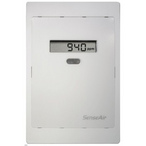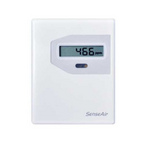



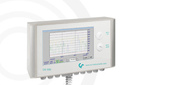




Measuring CO2 concentration allows creating a more favorable indoor climate and saving electricity by controlling individual fans, ventilation dampers, valves, etc. A standard task is to control ventilation in rooms where the number of people constantly changes. Such rooms include offices, lecture halls, cinemas, etc. Ventilation control is based on measuring temperature and carbon dioxide concentration.
Why control ventilation in commercial buildings?
The main source of carbon dioxide in office spaces is the air exhaled by people. The CO2 level usually varies from 390 to 2500 ppm (parts per million).
Modern European laws regulating CO (carbon monoxide) set a limit concentration of 35 ppm. Although CO2 content in the air is no less important a parameter, there are currently no laws regulating its concentration. To ensure a safe and comfortable environment, it is necessary to measure both parameters.
The maximum allowable time-weighted average concentration of CO2 over 8 hours is 5000 ppm. Currently, the American Society of Heating, Refrigerating and Air-Conditioning Engineers (ASHRAE) recommends ventilating office spaces based on a value of 10 l/s per person. Assuming the outdoor CO2 concentration is 390 ppm and CO2 is emitted at a rate of 0.31 l/min per person, the indoor concentration at the specified ventilation rate will be 910 ppm.
The term "sick building syndrome" (SBS) is used to describe a set of symptoms of unknown origin often observed in people working in office buildings. People suffering from SBS note that symptoms worsen when inside the building (especially office buildings) and disappear when outside.
How does it work?
 To achieve optimal ventilation performance, it is important to use an available and stable CO2 concentration sensor that allows accurately determining the amount of fresh air in the room. Correct measurement of carbon dioxide enables ventilation control depending on the specific environmental conditions at any given moment.
The sensor determines the amount of fresh air required in individual rooms and sends a signal to the control device managing the ventilation system. Thus, a well-thought-out and complete ventilation system not only creates a favorable indoor climate but also saves electricity.
The key advantages of CO2 control are:
- Life safety
- Electricity savings
- Cost reduction
- Environmental safety
- Favorable indoor climate
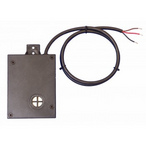
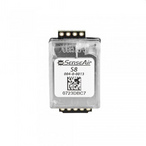
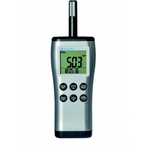
If you need CO2 concentration sensors, you can find a suitable device in the catalog or by contacting our specialists.
_80x0_e6f.jpg "Pressure Transmitter Series 23SX-H2")
1)_80x0_e6f.jpg "Happy Defender of the Fatherland Day!")
_80x0_c25.jpeg "Radar Level Meter IZMERKON RL 37")



_146x146_c23.jpg "Стрелка")