





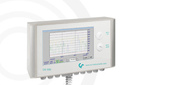




The period from when a hen lays an egg until the chick hatches is 21 days, and it is critically important to maintain the necessary ambient air conditions in the incubator throughout this time.
At poultry farms, chicks are raised as broilers or laying hens. The meat produced at poultry farms is the most consumed in the world.
How does it work?
Fertilized eggs are placed in a chamber where the CO2 concentration is regulated depending on their development stage. Fertilized eggs constantly emit CO2 (not 100% of eggs are fertilized), so continuous carbon dioxide measurement is required. Research results have shown that access to CO2 during embryonic development positively affects the health of the bird.
 CO2 level control in incubators also allows controlling the hatching time of chicks. The reason is that at increased carbon dioxide concentration in the egg, a fully developed chick begins to try to break out of the shell. When this starts to happen, oxygen supply should be increased.
After the chicks hatch from the eggs, they are transported in special chambers where the birds continue to develop during transportation. To keep the birds healthy during this time, it is necessary to maintain optimal carbon dioxide levels throughout the journey.
It has been found that the metabolism of birds slows down at elevated CO2 levels in the air, which leads to reduced time and feed required to raise broilers and laying hens. This reduces production costs and makes it more environmentally sustainable by lowering the feed-to-chicken meat ratio.
Poultry slaughter is carried out by increasing the carbon dioxide concentration and takes only a few seconds. This method is more humane than killing by electric shock.
Using carbon dioxide in poultry farming increases meat production efficiency by an average of 20%.
Thus, using CO2 control at poultry farms has the following advantages:
- Chicks hatch approximately at the same time, which reduces the staff required at breeding stations. Also, knowing the number of birds being transported makes planning transportation easier. This leads to cost reduction.
- Fewer birds die during transportation, which reduces expenses and increases profits.
- Feeding processes are simplified due to savings in both feed and time spent.
- Using CO2 simplifies poultry slaughter and makes the process painless.
- Using carbon dioxide for packaging and preserving products increases their shelf life. This reduces the amount of meat discarded due to expired consumption time.
If you need CO2 concentration sensors for controlling carbon dioxide at a poultry farm or for any other application, you can find a suitable device in the catalog or by contacting our specialists.
_80x0_e6f.jpg "Pressure Transmitter Series 23SX-H2")
1)_80x0_e6f.jpg "Happy Defender of the Fatherland Day!")
_80x0_c25.jpeg "Radar Level Meter IZMERKON RL 37")



_146x146_c23.jpg "Стрелка")