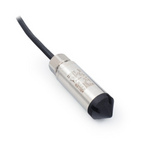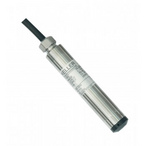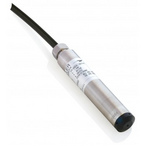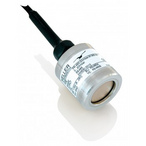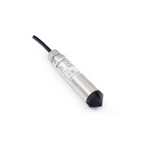


Submersible pressure transducers, also called level sensors, are designed for underwater use, so they must withstand long-term exposure to the working environment. If the advice described in this article is neglected, when measuring clean water, wastewater, as well as during monitoring in tanks, moisture can penetrate through the sensor housing, the cable itself, or its termination.
Sensor failure due to moisture ingress can be prevented by carefully selecting a device suitable for specific conditions. Therefore, it is recommended to choose a sensor that best fits the application, is specially designed for these conditions, and has been tested in them. The use of "standard" pressure sensors with minor modifications, such as cable output, should be avoided, even though such pseudo-submersible pressure transducers are widely available on the market. To prevent chemical decomposition and corrosion of the device, it is necessary to carefully select housing and sensitive element materials that can withstand the environmental impact. For use in standard non-aggressive environments, a sensor with a housing made of stainless steel 316L is sufficient. Even the simplest Keller level meters (for example, 26Y) are made from this type of steel. For non-standard applications or use in aggressive environments, it is recommended to use devices made from suitable materials such as Hastelloy or titanium. Keller level meters such as 36XW or 36 Xi W can be made from these materials.
 The risk of moisture penetration into the sensor through the cable requires making another difficult choice. When purchasing a submersible pressure transducer, the nature of the working environment and the technical characteristics of the sensor cable should be taken into account. Depending on the aggressiveness of the liquid, an appropriate cable material must be selected. In standard conditions, polyurethane (PUR) or polyethylene (PE) cables can be used, while for use in aggressive environments, a cable made of fluorinated ethylene propylene (FEP) should be chosen, which has the highest chemical resistance and can ensure safe operation even in the most aggressive environments. All Keller sensors can be equipped with either a standard polyethylene cable or a cable made of Teflon (FEP) or polyester (Hytrel TPE-E).
It is also extremely important to consider the immersion depth, which determines the pressure. This is especially relevant for standard applications such as wells, since any cable will remain impermeable to water only up to a certain immersion depth. Thus, a cable resistant to water pressure up to 10 bar may begin to allow liquid penetration at higher pressure, i.e., at depths greater than 100 meters. Standard Keller level meters (26Y) can measure at depths up to 200 meters. For operation at greater depths up to 500 meters, devices such as 36XW should be selected.
Deformation due to stretching, characteristic of this cable, should not be neglected either. At great depths, the weight of the submersible pressure transducer along with the cable may be sufficient to stretch the latter, causing sheath wear. Sheath wear, in turn, can cause liquid to penetrate into the cable and further into the sensor itself.
 Finally, physical damage to the cable sheath should be avoided. Cable abrasion or even the formation of nicks from sharp edges or improper use of tools during installation can lead to moisture entering the sensor through the damaged sheath. Proper cable laying using auxiliary means such as clamps that protect the cable from bending can reduce cable stretching deformation and prevent sheath abrasion.
If the level sensor is used in flowing water, for example, in rivers or tanks equipped with a mixing device, it is recommended to pass the cable through protective pipes or an inspection well to avoid mechanical stresses caused by cable abrasion or sudden level rises.
If you need to select a level sensor, you can do so in the catalog or by contacting our specialists.
_80x0_e6f.jpg "Pressure Transmitter Series 23SX-H2")
1)_80x0_e6f.jpg "Happy Defender of the Fatherland Day!")
_80x0_c25.jpeg "Radar Level Meter IZMERKON RL 37")