







Carbon dioxide has been used as a refrigerant for over 150 years. Driven by new legislation to reduce greenhouse gas emissions and improvements in technical capabilities, the automotive industry has begun to consider reducing carbon dioxide emissions into the atmosphere when using air conditioning systems. Pressure measurement plays a key role in this process.
Fluorocarbon gases with a global warming potential above 150 in car air conditioners were banned by the EU directive from January 2011. As a replacement, tetrafluoroethane refrigerant – R134a – was to be used. However, CO2 contains 1430 times fewer climate-harmful substances than R134a. It is proposed as an alternative due to its increased cooling efficiency and good chemical properties.
The arguments for using CO2 as a refrigerant are indisputable:
- CO2 is a natural gas, available in unlimited quantities worldwide, and is cost-effective for car manufacturers
- CO2 is much less destructive than other refrigerants such as R134a, R404A, R407C, and so on
- Being a by-product of industrial processes, CO2 does not require costly production
- Unlike other new refrigerants, CO2 is already well studied from a toxicological perspective
- CO2 is non-toxic, non-flammable, and thus its use presents less risk
- CO2 is compatible with all other common materials, shows very high cooling efficiency, and is suitable for heat pumps
However, the transition from R134a to R744 (the abbreviation for CO2 as a refrigerant) is not so simple. A number of CO2 disadvantages are balanced by numerous advantages, which is why it is only used when designing mobile air conditioners for vehicles. Among the advantages are very high operating pressure and low critical temperatures, around 31°C. Thus, the transition to R744 must be accompanied by necessary tests on test benches at manufacturers and their suppliers.
CO2 Air Conditioner – How It Works
The operation of a typical air conditioner begins, of course, with activating the AC switch inside the vehicle. As a result, the compressor’s magnetic clutch is energized (although new compressors do not have magnetic coupling. Pressure is regulated by the internal piston stroke). Then a connection is established between the pulley and the compressor shaft, which now moves in the gaseous refrigerant. Everything condenses here and is then pumped into the high-pressure pipeline. Meanwhile, the coolant temperature rises. The condenser, built into the front of the car, is responsible for lowering its temperature. At this stage, the refrigerant’s physical state changes from gaseous to liquid. Then the refrigerant is sent to a compartment where all moisture is removed, and then it passes through the expansion valve. After this, the refrigerant again changes its physical state inside the next evaporator. All the energy required for this is drawn from the surrounding air, which in turn lowers the temperature inside the car cabin. After that, the cycle repeats.
This cooling principle remains the same for applications using R744. The only difference is that the technical base changes somewhat. Due to its properties, carbon dioxide imposes different requirements on pressure and temperature.
Compared to a typical mobile cooling system, the additional internal heat exchanger is significantly different. This is very important because CO2 air conditioners operate with heat dissipation above 31°C. The cooling cycle proceeds as follows: the gas is compressed to supercritical pressure inside the compressor. From there, it enters the gas cooler, which acts as a condenser compared to conventional systems. Here the gas is cooled, but condensation does not occur. Further cooling takes place in the next heat exchanger. At the next stage, CO2 is pushed through the expansion valve, converting the gas into vapor. This vapor evaporates in the next evaporator, where the cooling effect occurs. Besides the internal heat exchanger and the gas cooler replacing the condenser, the high pressure essential for this system is the biggest difference from previous mobile cooling systems. The requirements for all components used in this process increase due to the high system pressure. This high pressure especially affects the compressor design, which must perform excellently after all results.
High pressures require high-performance measurement technology
 The main aspect in manufacturing new compressors is the small size of CO2 molecules, as this allows it to quickly penetrate through conventional sealing materials. New sealing material solutions are required to prevent cooling loss.
 The high pressures associated with climate systems using CO2 have additional advantages beyond good environmental characteristics and higher cooling performance compared to R134a. Due to the higher density of CO2, the required installation space is reduced compared to similar or even more powerful coolers using R134a. For the same cooling performance, only 13% of the volumetric flow of the R134a refrigerant compressor is required.
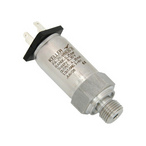
Size reduction is one of the main arguments in favor of increasingly compact pressure measurement technology. Keller pressure sensors will perform perfectly here thanks to their miniature size, high-precision function at low pressures, and their accurate results in higher pressure ranges – especially during long-term testing. The piezoresistive type of Keller pressure sensors additionally offers manufacturers developing new models a decisive advantage in that these devices, thanks to their modular design, can be quickly adapted to new requirements.
_80x0_e6f.jpg "Pressure Transmitter Series 23SX-H2")
1)_80x0_e6f.jpg "Happy Defender of the Fatherland Day!")
_80x0_c25.jpeg "Radar Level Meter IZMERKON RL 37")