




Many users are surprised that hydrostatic level sensors fail due to lightning strikes, despite having built-in lightning protection. Their confusion stems from a lack of understanding of how lightning protection works and how a lightning strike affects a hydrostatic level sensor. When submersible pressure transmitters were first used for level measurement, they often burned out as a result of thunderstorms. This accelerated the study of the impact of thunderstorms on level sensors.
 The first thing to understand is that the effect produced by a lightning strike will vary significantly depending on the distance from the sensor where it occurred. It should be acknowledged that no level sensor can withstand a direct or extremely close lightning strike, as the entire housing, including electronic components, will be burned in this case. More distant strikes will only cause a voltage difference, for example, of 1500 volts. If the lightning strike raises the electrical potential of the tank, the level sensor may become the shortest path to ground for the increased voltage and current. The electric current will flow to the ground through the sensor and simultaneously destroy or severely damage its electronic components. The same situation will occur if the strike hits wires suspended in the air.
 Nevertheless, the sensor can be protected if it contains integrated overvoltage protection. Due to the short duration of the voltage impulse, it is possible to install a component in the device that reacts to voltage increases. If the voltage exceeds a value, say 50 volts, the lightning protection will short-circuit the electrical circuit to ground, providing the current surge a path to grounding and protecting the electronic components by limiting the voltage potential to the maximum allowable value. The protective component will by default be in a non-conductive state but will become conductive in the event of a voltage change during the transient process, allowing the voltage surge to go to ground without damaging the device. If the contact with the ground is not reliable enough or if the sensor does not have built-in lightning protection, the electronic components will absorb the entire voltage surge and fail. For this reason, it can be said that lightning protection is only as reliable as the grounding provided by the user.
For outdoor use, which is standard for submersible pressure transmitters, it is recommended to equip the sensor with an optional lightning protection feature. In this case, the electronic components will be protected from local current surges and short-term voltage spikes. Lightning protection is a combination of built-in protective components in the device and reliable low-impedance grounding.
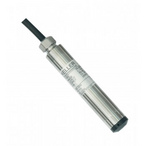
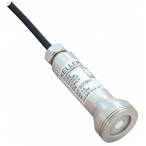
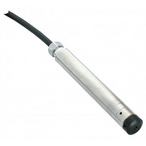
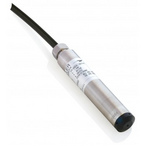
Such Keller sensors as 36XW, 36XS, 36KyX and 36Xi W can be equipped with optional lightning protection.
If you need to select a level sensor, you can do so in the catalog or by contacting our specialists.
_80x0_e6f.jpg "Pressure Transmitter Series 23SX-H2")
1)_80x0_e6f.jpg "Happy Defender of the Fatherland Day!")
_80x0_c25.jpeg "Radar Level Meter IZMERKON RL 37")