
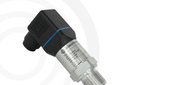
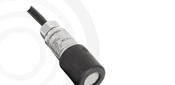
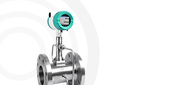


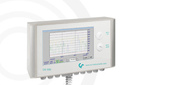

Sensors in the oil industry are used for accurate accounting of raw materials at all levels of processing and storage, as well as during technological processes. They are installed at accounting nodes, in distribution and measuring stations. These can be temperature, pressure, and medium level sensors.
- Where are modern sensors used?
- Features of sensors for the oil and gas industry
- Equipment for the oil industry from the company «Izmerkon»
They are subject to equally strict requirements for protection, explosion safety, and corrosion resistance, as their operation is expected in heavily loaded adverse conditions. There are sensors of different functionalities and in various designs. They can differ by the type of sensitive element and by the method of connection.
Among devices designed to monitor pressure in the system, those operating with capacitive and silicon piezoresistive elements are especially popular. They have high resistance to overloads and are characterized by long-term stability.
Models that provide level measurement in a tank and operate as part of complex accounting systems are also in demand. Their main quality criterion is high accuracy. Key requirements for this type of equipment also include the presence of an explosion-proof enclosure and an intrinsically safe electrical circuit.
Where are modern sensors used?
The oil refining and petrochemical industries involve the use of three types of sensors: level, temperature, and pressure. Temperature measuring devices help stabilize the technological process and control parameters important for its efficiency and safety.
Indicators and sensors are also installed in units for:
- hydrocracking, where distillates are processed and diesel fuel quality is improved;
- catalytic cracking, where temperature parameter fluctuations are unacceptable;
- reforming of straight-run gasoline, where the octane number is increased.
Additionally, they ensure economical operation of chemical reaction equipment, timely analyze critically important process parameters, which in turn guarantees high efficiency and low production cost.
In the petrochemical industry, sensors also monitor rectification columns, allowing optimization of energy consumption and ensuring stable product quality.
Features of sensors for the oil and gas industry
Sensors are used as equipment for automating technological processes. Devices are equipped with stainless steel housings, ensuring their resistance to aggressive chemical environments.
 Many models operate as inductive contactless devices and can be installed directly in a tank, on a pipeline, or for monitoring safety or shut-off valve elements.
Each model has its own temperature range and allowable operating pressure. As for level sensors, they necessarily take into account the specific characteristics of liquids — their increased viscosity, density, and explosiveness. Float-type models are usually used for level control in tanks.
If sensors are assigned the category of "explosion-proof" or "especially explosion-proof" equipment, they are certified and receive permission from Gostekhnadzor.
Equipment for the oil industry from the company «Izmerkon»
 Complex engineering systems are used for the extraction and processing of oil raw materials. Sensors manufactured by Keller are available.
The range includes pressure sensors capable of operating at temperatures up to 200 degrees and measuring pressure up to 1500 bar. In addition, you can select high-precision and reliable devices for level control in wells, pressure measurement in tanks, and pressure measurement in liquid and gas valves.
There are also pressure gauges, pressure recorders, and flow velocity sensors for pipelines. You can always request a consultation on the existing range or submit a request for selection.
_80x0_e6f.jpg "Pressure Transmitter Series 23SX-H2")
1)_80x0_e6f.jpg "Happy Defender of the Fatherland Day!")
_80x0_c25.jpeg "Radar Level Meter IZMERKON RL 37")


