




KELLER intends to move away from the DIN (Ger. Deutsches Institut für Normung e.V. — German Institute for Standardization) standards in the future. The company funds the introduction of accuracy classes, as has already been done for instruments in the manometer subclass. The operating conditions of these instruments, under which the obtained results will be true, are usually specified in the specifications.
New European Union standards impose even stricter requirements on manufacturers of electronic sensors. The transition from sensors produced by OEM methods to similar converters is recommended to increase the benefit of their use for the end customer.
30-year history of the Series 10. A bit of the past
In the 1970s, companies working in fields such as hydraulics and water resource management faced growing customer demands to reduce the cost of electronic pressure measuring instruments. Pressure sensors, such as thin-film and piezoresistive sensors, were in a price range that could no longer be used in this developing market. Therefore, many companies started their own projects to develop and design their own inexpensive sensors. In most cases, electronics developed rapidly, but the development of pressure sensors followed a more problematic path.
This gap was filled by KELLER Series 10 sensors, which originated in 1978. What followed was the beginning of the triumphant march of piezoresistive technology in all areas where it was needed. Well-known companies in the industry, some of which had their own sensor manufacturing technologies for quite a long time, could no longer wait for their own development completion and flooded the market with new KELLER piezoresistive sensors of the 10th series.
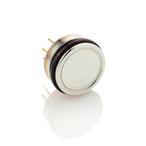
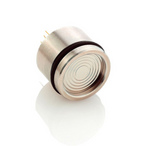
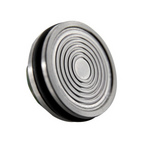
The range of OEM components has significantly expanded in recent years. New technologies, such as high-temperature diaphragm soldering and laser welding, have introduced some significant improvements, allowing the element diameter to be reduced to 9 mm without compromising performance.
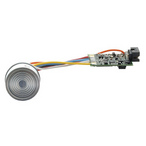
Although OEM converters (OEM sensors with electronics) have been in the product range (product nomenclature) for many years, their share compared to OEM converters is only about 2%. The success of CIO technology (Chip in oil), where the amplifier is located next to the sensor on a glass substrate in an oil chamber, also did not materialize.
This is probably because companies want to have as much in-house manufacturing depth as possible. The advantage is that the high output signal of the piezoelectric sensor makes it relatively easy to implement an electronic amplifier. Therefore, compensation and adjustment resistors in the circuit are soldered just as they were 30 years ago. However, these resistors are becoming increasingly difficult to produce because they are used less and less worldwide.
A) new compensation technologies: Y lines
B) new EU guidelines


A) new compensation technologies: Y lines
Compared to other series models that are not based on microprocessor compensation, Y-line transmitters have extremely low temperature error. This is achieved using an additional circuit containing a temperature sensor, which divides the entire temperature range into sections of 1.5 Kelvin(K). The zero TK and the value of the TK compensation gain coefficient are calculated for each section according to a mathematical model and programmed into the additional circuit. These values are fed into the analog signal correction during operation, depending on the temperature. Each temperature value is a “calibration temperature” for this converter. Their accuracy is mainly determined by the linear law.
In theory, up to 120 sections are available, which means a maximum temperature range of 180 K is available. The wider the temperature range, the more expensive it becomes to perform the testing and calibration necessary to minimize the errors of the mathematical model.
Accuracy changes according to a linear law. Since typical nonlinearities of 0.2% FSO are standard for modern pressure sensors, and at the same time an error of 0.25% is achievable for a temperature range of 100 K! This represents a significant advancement compared to 30-year-old technology, and importantly, the compensation values are supplied in parallel, which does not cause a drop in measurement frequency.
Calibration at the factory in Switzerland, and therefore it is more efficient and more reliable:
Calibration and final verification are performed in a single operation in automated systems designed with modern technologies in mind. In these pressure/temperature calibration systems, the leads from the transducers are placed into a connector on a PC board. Through an auxiliary PC connector, information about various pressures and temperatures is collected, correction values are calculated for each temperature segment and for each transducer, and they are recorded in the transducer's memory, called EEPROM (Electrically Erasable Programmable Read-Only Memory) — electrically erasable programmable ROM (EEPROM), one of the types of non-volatile memory (such as PROM and EPROM). After this, the transducer is considered fully programmed.
Data from the programmed transducers are then checked at various pressures and temperatures using the same test setups or the same testing process and transmitted to the main computer. Data from each individual transducer is displayed on the screen with predefined accuracy, which instantly provides a complete understanding of the accuracy of the unit (see the diagram «PAA-21Y 8 bar with predefined accuracy» - «PAA-21Y 8 bar error band»).

This information can also be sent to the customer. It is an invaluable tool for selecting the most suitable sensors for applications depending on requirements, particularly for OEM clients who use transducers for a wide variety of purposes.
B) New Electromagnetic Compatibility Directives
In 1988, under the auspices of the EU, the first directive on European Electromagnetic Compatibility (EMC) for electrical/electronic components was introduced. According to the directive, a mandatory condition for using a product in the EU zone is compliance with Electromagnetic Compatibility standards and the presence of the conformity mark using the «CE» symbol, without which the product cannot be sold in Europe.
Further discussions took place in the field of pressure measurement technology. Mainly, dialogues concerned various disturbances, particularly interference caused by external magnetic fields (for example, from cellular communication transceiver antennas), which were not addressed in the 1988 directive. It only specified conditions for test laboratories creating field strengths of about 10 V/m. Since most pressure sensors that came to market before 1988 were designed without EMC protection, nevertheless, the range of signal value changes varies from 10% to 50% of the 10 V/m field strength, so no further actions were taken.

New 2008 Directive
In 2008, new directives were adopted with the goal of achieving full regulation regarding EMC. These directives clearly defined permissible changes in alternating electromagnetic radiation with a field strength of 10 V/m.
Examples: for transducers in the 1.1% FSO range, the maximum error can be ± 0.1% FSO, and for the 3% FSO range, this value cannot exceed ± 0.5% FSO.
However, achieving such indicators as these and verifying the accuracy of these values requires more specialized expertise and laboratory testing. The indicators for the new line of OEM Y-transmitters are significantly better than those listed above. This means that transmitters of this type can be installed in any housing, including in a case made of non-conductive plastic.
The company «Keller» has managed to install components that comply with all EMC standards on the electronic base thanks to the development of new Y-electronics technologies. The measured emission values are many times lower than the maximum permissible values.
Accuracy in a simple way: Accuracy classes
Mechanical manometers are divided into classes. Class 1% means an accuracy of <± 1%. If you ask sellers about the temperature at which this accuracy is guaranteed, most of them will not answer. It is clear that the temperatures required for mechanical manometers are not as extreme as those for pressure transmitters, since people have access to manometers to take pressure readings. Despite this, there is still confusion regarding the accuracy of pressure sensors and pressure transmitters. DIN standards NPW 16 NR: 19-90 DIN 16 086, which are intended for regulation and classification, contain about 50 terms in the list: accuracy assessments or error definitions for these conditions are the work of well-trained metrology engineers. And many specifications are already written in this way. Critics quite rightly note that all this is only intended to mask «inaccuracies».
The class of each individual transmitter can be quickly determined from the «PAA-21Y 8 bar error band» diagram. The class is the maximum difference between the target value and the actual value. The specification describes all the accompanying operating conditions: power supply, output signal, pressure range, temperature range, overloads, maximum temperature, service life, and everything required.
Three Keller accuracy classes
The Y-line class fills the gap between transmitters that have been manufactured in the same way for 35 years (the G series in the list below, where resistors are soldered not manually but with machine installations), and the high-precision transmitters of the 30 X series. The gap was also problematic because the 30 X Series transmitters can only be used at frequencies up to 200 Hz.

The accuracy of these two temperature ranges is indicated in the Keller specification. These values are usually achievable without special selective methods. Each technology also has a path to increase the accuracy class either by selective selection of the most suitable sensor or by reducing production.
«Specifications should be considered only as a guide for decision-making» as Dr. Schodel from E+H expressed 30 years ago. In particular, in projects where transmitters are intended for the same purposes, with the choice of optimal technology and optimal adaptation, price is often the most important specification.
_80x0_e6f.jpg "Pressure Transmitter Series 23SX-H2")
1)_80x0_e6f.jpg "Happy Defender of the Fatherland Day!")
_80x0_c25.jpeg "Radar Level Meter IZMERKON RL 37")