







According to statistics, 96% of the water on Earth is salty, from the World Ocean. It is home to thousands of species of plants, fish, and mammals. Also, 50% of photosynthetic oxygen production occurs precisely in the oceans. The science that studies all these and other phenomena related to oceans as habitats and sources of resources is oceanology.
This term refers to a combination of sciences — chemistry, physics, biology, geography — all within the scope related to the ocean. They are all aimed at studying the processes of energy and matter exchange, their transformation, and interconnection. From a practical standpoint, this science is intended to enable the use of resources (water and seabed), as well as ensure the safety of navigation.
Oceanology is based on various shipboard measurements. For example, temperature is determined, samples are taken, chemical analyses and hydroacoustic measurements are conducted. All this allows monitoring deep currents, determining the height of possible waves, creating navigation charts, and so on.
Branches of Oceanology
There are 4 main directions (branches) in the science specializing in the waters of the World Ocean:
- Physics is divided into such areas as hydrodynamics, acoustics, optics, electromagnetic and radioactive studies. This branch searches for patterns in the interaction between ocean waters and the atmosphere both in the short and long term. It studies thermal and water balance, temperature fluctuations, wave dynamics, tsunamis and tides, sound wave propagation processes, and natural noises within the water column.
- Chemistry studies the composition of waters and bottom sediments, existing ionic and molecular forms, and ongoing biochemical transformations. It also analyzes salinity levels, the amount of dissolved substances (phosphorus, nitrogen, oxygen, carbon dioxide). This branch of science allows identifying water masses by composition, tracking changes in the ocean’s chemical balance, the concentration of substances in bottom sediments, and where mineral deposits form.
- Geology studies the relief of the ocean floor, sediment types, and the processes of their formation. It involves searching for oil and gas, metal-bearing and mineral layers, and calculating the patterns of their formation. Additionally, this branch of oceanology investigates global tectonics — plate movements and continental drift.
- Biology studies all living organisms inhabiting ocean waters, from plankton and microorganisms to larger creatures. It examines the functioning of biological communities and the dynamics of their development. A special focus in this branch is commercial oceanography, which deals with assessing the biological productivity of ocean waters.
Practical Tasks
Each branch of oceanology as a science has its own tasks with purely practical, not just research, significance. Here are the main ones:
- Physics determines the current state and dynamics of changes in water masses;
- Chemistry seeks solutions for extracting valuable substances from ocean waters, as well as mitigating pollution related to human activity;
- Biology assesses the current biomass, its productivity, and looks for ways to increase this characteristic;
- Geology allows estimating the volumes of mineral resources in bottom deposits.
Additionally, separate “applied” directions include hydrological forecasts, commercial oceanology, and the study of synoptic variability.
All this helps improve ships, increase fishery volumes, provide more accurate weather forecasts, and even develop methods for using the World Ocean as an energy source.
Often, oceanologists engage in research activities related to solving some practical task, but there are also directions that simply study oceans as natural objects.
Special Equipment
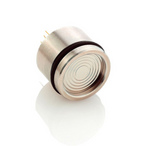
Special measuring equipment (pressure sensors) is used for instrumental study of surface waves, continuous measurement of sea level fluctuations. This, in turn, is important for ensuring the safe operation of oil platforms and drilling rigs. Such equipment measures hydrostatic pressure at depth, which allows reliably assessing the spectrum of wind waves.
The company “Izmerkon” offers sensors from the Swiss company KELLER. Available are models of the 10 series, equipped with wires for signal output. The sensitive element in such devices is considered a piezoresistive silicon chip. They are distinguished by reliability and stable operation and can be used at research oceanological stations.
_80x0_e6f.jpg "Pressure Transmitter Series 23SX-H2")
1)_80x0_e6f.jpg "Happy Defender of the Fatherland Day!")
_80x0_c25.jpeg "Radar Level Meter IZMERKON RL 37")