

.jpg)
In modern agriculture, greenhouses have become complex technological complexes where every parameter plays an important role in shaping the final result. The concentration of carbon dioxide (CO₂) is of particular importance, as it directly affects the growth rate and vitality of plant crops.
The natural level of CO₂ in the air (about 400 ppm) is insufficient for intensive plant cultivation. Increasing the concentration to optimal levels activates the photosynthesis process, leading to accelerated crop development and significant yield growth. However, achieving these levels requires utmost precision in management.
Risks of improper CO₂ control
Lack of quality monitoring when enriching the environment with carbon dioxide can lead to negative consequences:
- Insufficient concentration leads to underutilization of plant growth potential and reduced yields.
- Excessive saturation results in unjustified expenses on gas and energy resources without corresponding effect.
- Balance disruption can destabilize the entire greenhouse climate system, including temperature and humidity.
To prevent such situations, constant and accurate control of carbon dioxide levels is necessary.
Specifics of working in greenhouse conditions
Ordinary measuring instruments often fail under greenhouse production conditions due to:
- High humidity reaching 95% and above.
- Significant fluctuations in CO₂ concentration from baseline levels up to 10,000 ppm.
- Substantial temperature variations throughout the day and across seasons.
These factors lead to rapid failure of standard sensors and distortion of readings.
NDIR technology: a professional solution for agribusiness
The nondispersive infrared spectroscopy (NDIR) method is the optimal solution for greenhouse farming:
- Selective detection allows precise identification of only CO₂ molecules, excluding the influence of other gases.
- Measurement stability is ensured by the absence of consumables and the need for frequent calibration.
- Wide measurement range enables control of both background values and elevated concentrations.
- Climate resilience guarantees operability under extreme humidity and temperature conditions.

Professional solutions for greenhouse production
When choosing measuring equipment, it is important to consider the specifics of the application. The company «Izmerkon» offers specialized solutions:
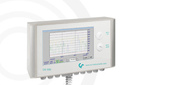
- CO₂ sensor - eSense Ind Disp
- CO₂ sensor - SUNRISE
These devices are designed taking into account the features of greenhouse production and are capable of operating under conditions of high humidity and CO₂ concentration. They provide quick response to changes and long-term stability of readings. Unlike adapted models, they are ready to work in the greenhouse from day one.
In modern conditions, accurate CO₂ control has become an integral part of successful greenhouse business. Using professional NDIR sensors allows optimizing the climate, increasing yields, and making production more efficient and profitable.
For additional information about the devices, you can contact IZMERKON by phone at +7 (812) 309 56 05 or via the feedback form.
_80x0_e6f.jpg "Pressure Transmitter Series 23SX-H2")
1)_80x0_e6f.jpg "Happy Defender of the Fatherland Day!")
_80x0_c25.jpeg "Radar Level Meter IZMERKON RL 37")


_146x146_c23.jpg "Стрелка")