



Piezoresistive technologies on the right track.
Author Hans W. Keller, 03/2000
Future: The pressure transducer that will dominate the industrial market will have a silicon chip with integrated electronics produced using IC (Integrated Circuit) technology, and it will be embedded in an oil-filled housing with an insulated diaphragm.
 History
40 years ago the author published his first work in the pressure measurement industry, at a time when the cost of a typical pressure transducer ranged from $350 to $600. The prevailing technology used for pressure measurements then were strain gauge sensors (strain gauges; tensiometers) from Bell and Howell as well as strain gauges from Hottinger and Baldwin. Schaevitz also developed LVDT technology (low-voltage differential signaling), capacitive resistance, potentiometer, and electromagnetic resistance based on the principle of a deflecting diaphragm. In addition, there were dozens of other measurement systems presented on the market, but they had only a small share.
These technologies were in most cases either too expensive or did not have the necessary stability.
In the early 60s, "Statham" produced the first thin-film sensors with good stability, and they immediately appeared on the market at approximately the same price as the existing strain gauge sensors. This was the beginning of a breakthrough for the development of this type of technology. Unfortunately, it did not lead to a significant price reduction for the mass market.
However, the demand for inexpensive, stable sensors could not be ignored. Their research and development also progressed rapidly. Most were based on the piezoresistive effect, discovered and published by "Pfann and Thursten." The "Gauge Factor" (change in resistance with change in length) for metal wires is about 2 and is mainly caused by expansion and "thinning" of the wire under stress with the addition of a minor piezoresistive effect (change in resistivity with stress).
However, the piezoresistive effect in doped semiconductor resistors can be up to 50 times greater, giving Gauge Factors of about 100.
Many improvements were made in the technological process of converting brittle semiconductor materials into thin whiskers (and obtaining semiconductor strain gauge sensors) and their connection to the moving parts, such as the diaphragm or flexible beam. Several companies that mastered this difficult challenge, such as Data Instruments, Sensometrics, and Microgauge, still offer this technology today.
Researchers became enthusiastic when, in 1964, the first planar transistor appeared on the market – this was the beginning of integrated circuit (IC) technologies, and entire resistive bridges could now fit into a small silicon chip. There were many attempts at that time to attach these small flat boards to a metal diaphragm or similar material. Well-known companies such as Philips "stuck their necks out and suffered failure after failure." These failures created insurmountable obstacles for the development of piezoresistive technology and also reinforced the general belief that only thin-film sensors could be truly stable. This trend is sometimes observed even today…
Honeywell was the first to propose the idea of using a silicon chip with diffusion resistors as a pressure diaphragm. Now the tiny fragile diaphragm had to be connected to a carrier made of steel or glass.
The problem of bonding materials as different as silicon and steel was partially overcome because the sensor elements were only indirectly affected by the housing forces, and most of these forces could be eliminated by the spatial arrangement of the resistors on the diaphragm. Tony Kertz left Honeywell at this stage of technology and separately founded the company Kulite. Drag, in England, also founded their company based on this technology.
A major breakthrough in piezoresistive technology research was made with the invention of reproducible, integrated, homogeneous silicon sensing cells, for which Honeywell holds the copyright and original patent. It was immediately predicted that these pressure sensors could be produced more cheaply and in larger quantities. "Art Zias" adopted this Honeywell technology for National Semiconductor, which expected this technology to lead the company into big business. However, the first large-scale production of these sensing cells was launched by Delco for MAP sensors (Manifold Pressure measurement). In 1966, the US Congress passed the Clean Air Bill, which limited the maximum allowable emissions from automobiles. Specialists from the automotive industry requested a delay because technologies, and above all economically viable sensors, were still not available.
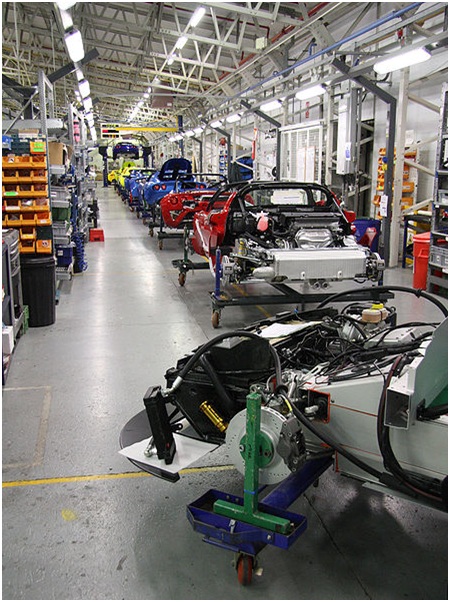
In the early 1970s, the first cars appeared on the market with electronic control systems and silicon sensors based on MAP technology (MAP-Sensor), whose operating standards complied with the aforementioned Clean Air Bill document.
Silicon sensors were integrated into cars either without protection or with silicone film protection. This method of protection proved insufficient for industrial applications and substance level measurements. National Semiconductor found itself indecisive about how the product should be brought to the industrial market. For example, the Parylene coating was positioned as an excellent waterproof layer only after 6 months of successful use! The National Semiconductor level transducer usage guide was roughly written as follows — “You take a rubber glove, fill it with silicon/silicone or olive oil, attach a cable with a sensor and an electronic circuit to the glove, connect it all together, and dip it into the sauce.” In reality, however, there was much genius in the manual, and according to ArtZias, National Semiconductor’s revenues for some time were higher from selling books than from selling measuring cells. This clearly gives an idea of how many inquisitive minds were engaged in studying pressure measurement using sensor technologies!
In a last desperate attempt, National Semiconductor launched an advertising campaign under the slogan: “A completely new way to measure pressure: a ‘bare’ silicon sensor is enough for this.” The author parodied an old saying: “A completely new way to make love: Bare.” The inability of American manufacturers to develop a protective housing for silicon sensors allowed new technologies to develop in the industry. A similar trend was also observed in the automotive industry: capacitive ceramic measuring cells from “Kavlico” (which are also produced today by “Texas Instruments”) were manufactured in millions of units.
Europeans and Japanese were not much smarter. In Europe, Magnetti-Marelli (Fiat) developed ceramic thick-film strain gauge measuring cells, which, however, were inferior in all respects to capacitive measuring cells. Technologically speaking, this is due to instability caused by the influence at the bonding point of the ceramic and the sensitive element, as well as the extremely high resistance of the bridge. Here again, the experience of silicon technologies was not taken into account. From Japan, a product from “NipponDenso” was supplied, where pressure is applied to the bare silicon sensor from the back, allowing the electronics and the sensor itself to be protected by a gel layer. But in this case, the sensor will still be subjected to atmospheric pressure. Besides the fact that absolute pressure sensors can hardly be produced at all, the author’s analysis of pressure transducer creation creates the same impression of helplessness as was shown by “National Semiconductor.”
Present and Future
In 1993, in the article “Pressure Sensor Marketing,” specially published for the “Trade Fair News,” the following was predicted: “Sooner or later, market positions will be determined by technology competition. We believe that most industrial measuring instruments operating in the range from 10 mbar to 1 bar will be produced based on capacitive ceramic cells. In the range from 1 bar to 1000 bar, devices based on piezoresistive monolithic silicon (IC) technologies will dominate. Other technologies will be in demand only in niche markets, since, for example, the technological process used in the production of thin-film sensors is economically unprofitable for very large projects due to its high cost.”
This was written in 1993! In some areas — such as cooling compressor equipment — silicon piezoresistive technology managed to break the dominance of capacitive ceramic technology, which previously dominated the market. Nevertheless, capacitive ceramic sensors are used extensively for the development and implementation of various automotive projects. Still, we stand by our previously made commitments and statements.
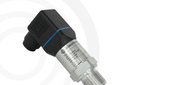
 Keller AG presents a new silicon piezoresistive transducer (Fig. 1), which, in our opinion, has key technological advantages compared to the capacitive ceramic sensor. Possibly, in the future, this technology will prove its superiority even in the complex automotive industry.
The creation of housings with a separating diaphragm has been the central theme of KELLER AG since its founding 40 years ago. Today, “Keller” has established processes for manufacturing housings for silicon sensors, the production costs of which are comparable to those of ceramic housings. In a patented process, a continuous, belt conveyor furnace sequentially solders a brass housing, a steel insert, and a nickel diaphragm in one operation. This process can be fully automated.
As for electronics and its regulation, no cost advantage can be determined for any technology. The accuracy of electronics also no longer matters. High stability and the use of specific custom ASIC circuits (application-specific integrated circuit) can compensate for inaccuracies.
The advantages and disadvantages are therefore determined only by the costs associated with the production of the sensors themselves and their housings.
Nevertheless, while 5000 silicon sensors can fit on one 6-inch silicon wafer, 10 large trays are needed for 5000 ceramic cells. 5000 silicon sensors go through various screening processes (thorough inspection, sorting, filtering, selection) simultaneously and together, whereas 5000 ceramic sensors must go through these processes individually.
Mounting silicon sensors on a TO5 header with glass feedthroughs is sealed into the housing, similar to transistor packaging. All processes are automated, using machines from the semiconductor industry, such as Die Bonding and automatic Wire Bonding, which improve every year. Final assembly was done by welding, which was carried out below the oil filling layer. The feasibility of this technology has been proven over 25 years.
As a result, the silicon sensor is protected from all adverse effects by a hermetic oil-filled chamber. The only materials in contact with the measured medium are metal (stainless steel, titanium, Hastelloy).
 On the contrary, the ceramic sensor is sealed in a housing with a sealing ring, which must be selected according to the environment in which the pressure is measured. This means that the same sealing ring cannot be used simultaneously for measuring pressure in hot water and in gasoline. Moreover, the sealing ring is always a potentially weak point. The company Envec (Endress+Hauser Group) tried to reassure customers with an advertising campaign with the following statement:
Pressure sensors can only break after 5 years, and the football club Bayern Munich can be relegated to a lower league next year.
To be precise, Envec should rephrase this statement and say: Pressure transmitters with a ceramic measuring cell with a sealing ring will fail within 5 years. Envec's statement only summarizes the general problem characteristic of their technology. But let's leave that aside…
Currently, most of the material costs for producing a transmitter are associated with the use of appropriate high-precision and high-tech electronics. Nevertheless, further cost reductions can be anticipated with the introduction of piezoresistive technology. Today, there are already piezoresistive sensors from Bosch and Fuji, with adjustable integrated electronics in the piezoresistive silicon chip. Adjustment is done by laser trimming on the chip surface. Work is currently underway on similar circuits where chip adaptation is done via an interface of leads inside the oil chamber itself.
The overall density of IC technology is growing so fast that, in our estimate, within 10 years a pressure sensor, amplifiers, and digital compensation with A/D and D/A converters can be integrated on a piezoresistive silicon chip at a cost of only $1 per unit. Then the fully assembled transmitter with electronics will be optimally protected in an oil housing, and capacitive glass feedthroughs will automatically guarantee excellent EMC protection.
40 years ago we aimed to obtain a sensor with 2% accuracy and a cost of $10
In the next 10 years our goal is to obtain a sensor with 0.1% accuracy and a cost of $5
_80x0_e6f.jpg "Pressure Transmitter Series 23SX-H2")
1)_80x0_e6f.jpg "Happy Defender of the Fatherland Day!")
_80x0_c25.jpeg "Radar Level Meter IZMERKON RL 37")


