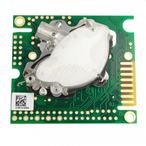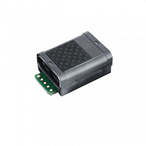






Non-dispersive Infrared Sensor (NDIR) has a detector that measures the amount of infrared radiation of a specific wavelength absorbed by the surrounding air. The sensor records the residual amount of light passing through the measurement section. This measurement is then used to calculate the gas concentration.
Compared to electrochemical sensors, the lifespan of NDIR sensors is significantly longer. This is because the sensor does not burn out, degrading its performance when exposed to gases. For NDIR sensors, interference from other gases during measurements is minimal.
As for semiconductor metal oxide gas sensors, they work best at high concentrations (2,000 - 10,000 ppm) and are sensitive to fluctuations in humidity and temperature. Semiconductor sensors degrade because non-target gases are absorbed by the oxide surface.
NDIR sensors operate at any concentration of the measured gas.
Advantages of NDIR sensors:
- High stability
- Low cost
- Lifespan with maintained accuracy of at least 15 years
- High selectivity for a specific gas
- Prolonged exposure to high concentrations of the target gas over an extended period will not cause irreversible changes in sensor sensitivity.
Sensors drift over time, which means periodic calibration is necessary.
Thanks to Senseair's automatic baseline correction, the drift of our NDIR sensors is automatically adjusted during normal indoor use, eliminating the need for manual sensor recalibration.
For more information about the devices, you can contact IZMERKON by phone at +7 (812) 309 56 05 or via the feedback form.
_80x0_e6f.jpg "Pressure Transmitter Series 23SX-H2")
1)_80x0_e6f.jpg "Happy Defender of the Fatherland Day!")
_80x0_c25.jpeg "Radar Level Meter IZMERKON RL 37")