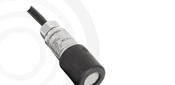


If you want to perform simple and reliable level measurement, you will most likely need a hydrostatic sensor. Such devices are in close contact with the measured liquid medium, with not only the sensor housing but also the submerged part of the cable in contact with the liquid. In addition, due to splashes, rain, and condensation, the part of the cable that is not constantly submerged often also comes into contact with the liquid. All this happens not only during measurements but also during installation, commissioning, and maintenance of the devices.
Regardless of the sensor's application area, insufficient protection can allow moisture to penetrate the cable, causing premature device failure. Moisture reaching the cable leads and further down to the electronic components must be prevented by taking precautionary measures.
For the most accurate level measurement, the pressure of the air above the liquid must be compensated relative to the hydrostatic pressure exerted on the sensor. For this reason, without adequate precautions, there is a constant risk of sensor damage due to moisture ingress (both through the vent tube and through the cable itself).
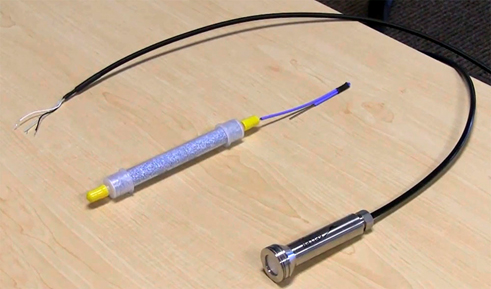
To compensate for atmospheric pressure, the sensor’s sensitive element inside the housing is connected via a vent tube in the cable to the atmosphere. Due to capillary action in the vent tube, moisture from the surrounding environment can enter the sensor. Not only air but also moisture enters the tube, which can cause irreversible damage to the sensitive element and electronic components. This can result in measurement errors or, in the worst case, complete device failure. To prevent this, moisture ingress into the vent tube must be avoided. Additional protection in this case is the use of a special filter at the tube end that allows air to pass but blocks water.
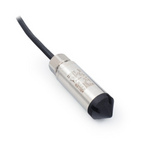
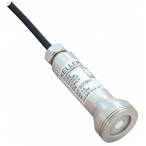
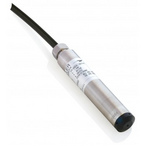
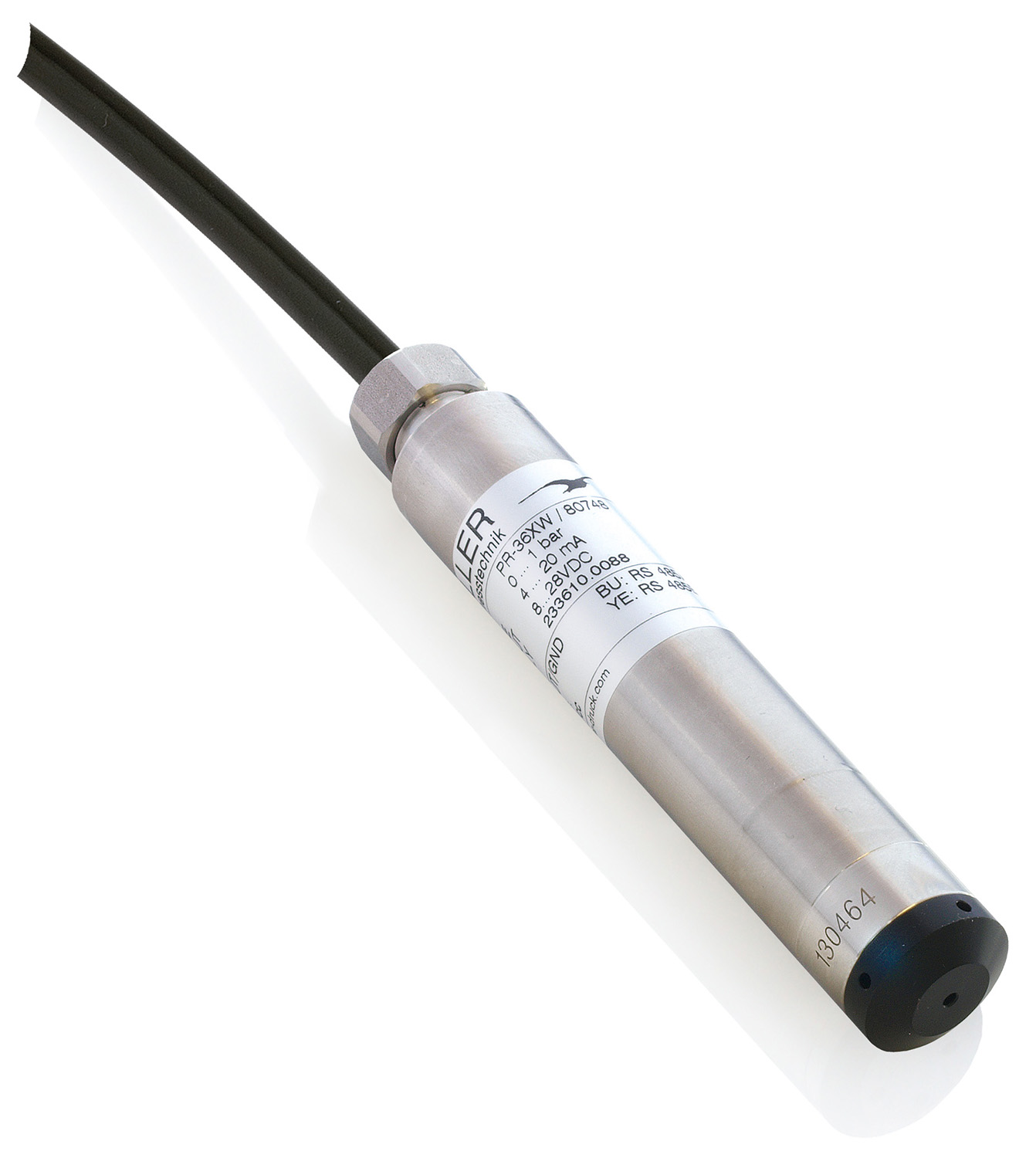 The possibility of liquid penetration from a high-humidity environment along only partially protected internal cable wires down to the level transmitter should also not be ignored. The design of Keller level sensors, such as 26Y, 36XW, or 36XKY, prevents moisture ingress into the device as much as possible. Nevertheless, due to molecular diffusion and capillary effects, 100% protection of the device throughout its service life is impossible. For this reason, it is always recommended to route the cable end into a waterproof junction box with a sufficient protection rating (e.g., IP65). If this box is exposed to weather and temperature effects, controlled pressure equalization should also be considered to prevent water condensation and neutralize pumping effects. Keller can supply protective filters that allow air but block moisture as accessories along with the sensors.
Moisture can penetrate not only through the cable end but also through mechanical damage to the braid, as well as due to diffusion caused by insufficient chemical resistance of the cable material. To prevent this, all Keller sensors can be equipped not only with standard polyethylene cables but also with cables made of Teflon (FEP) or polyester (Hytrel TPE-E).
If you need to select a level sensor, you can do so in the catalog or by contacting our specialists.
_80x0_e6f.jpg "Pressure Transmitter Series 23SX-H2")
1)_80x0_e6f.jpg "Happy Defender of the Fatherland Day!")
_80x0_c25.jpeg "Radar Level Meter IZMERKON RL 37")