
Temperature Logger
Loggers are comprehensive recording devices that allow measuring physical quantities (humidity, temperature) both once and for dynamic monitoring. Measuring temperature and humidity conditions is relevant in many industrial fields, agriculture, storage facilities for monitoring storage conditions, as well as in scientific research and even everyday life.
In most cases, a temperature or humidity logger collects data over a certain period. It responds to connected sensors and records all changes, logging several thousand readings during operation.
Using Reading Devices for Managing Technological Processes

In warehouses and production workshops, validation procedures are regularly conducted, which is a check to prove process compliance with standards. Temperature and humidity recorders confirm proper microclimatic conditions. This can be critically important for:
- operation of critical equipment;
- ensuring normal conditions for personnel;
- production and storage of food and pharmaceutical products;
- pasteurization of milk and juices;
- transportation of medicines, immunobiological products, vaccines;
- production of reinforced concrete products;
- operation of poultry farms, livestock farms, greenhouse complexes;
- maintenance of ventilation, air conditioning, heating systems;
- functioning of research laboratories.
Logger monitoring is also conducted in museum exhibition halls, banks, educational and medical institutions.
Process mapping is performed for control. It can be done manually using portable devices, but this method is labor-intensive and suitable for one-time, not continuous processes. Highly efficient autonomous recorders monitor continuously and require almost no staff intervention. They allow obtaining information about parameters in the monitored area at any time, as well as receiving alerts if any failures or destabilizations occur. The price of multifunctional autonomous loggers is higher, but they are more convenient and accurate.
Use of Loggers in Agriculture

Recording devices are widely used in agriculture to monitor microclimatic indicators in greenhouses, poultry and livestock complexes, experimental farms, and hotbeds. Their use is especially justified when growing exotic "delicate" crops and during the rearing of young poultry (for incubator operation).
The larger the area of an agro-industrial complex or poultry farm, the more in demand are data loggers that work together with temperature and humidity sensors. Using multifunctional self-recording equipment allows creating a unified system for monitoring and regulating the microclimate. Reading sensors transmitting information to a central unit can be located in the most hard-to-reach areas and do not require regular intervention. Autonomous recorders are easy to maintain, exclude the influence of external factors on recorded information, and provide quick access to recorded data.
Temperature and Humidity Loggers in Server Rooms

Computers generate heat during operation, and overheating negatively affects processor performance. High temperatures and humidity levels are unacceptable in server centers, so climate control equipment is installed. If cooling or power supply systems fail, the logger will record an increase in temperature/humidity levels.
For comprehensive monitoring, recording devices are supplemented with sensors installed at different points in the room and integrated into an audible alarm system. It signals alarms when measured values exceed permissible limits. If changes in climatic parameters are not noticed in time, it may cause failures in the data processing center and even block access to information stored on servers, which in turn can lead to restrictions in the operation of entire departments.
In all these cases, the use of household controllers is unacceptable because their threshold values do not meet industrial standards. For example, refrigerators cool down to -50 or -70 degrees, and transformers at electrical substations heat up to +200 degrees. Such temperatures do not occur in everyday life. Moreover, compact and budget models cannot read information simultaneously from several independently located sensors.
Temperature Data Logger
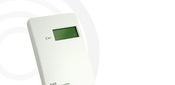
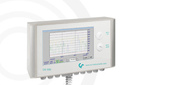
The company Izmerkon from Saint Petersburg offers mobile autonomous data loggers in its store – compact digital, portable, or multifunctional, in a separate case. Such devices are used for continuous auditing and allow preparing information for reports (the digital interface allows transferring data to a computer for processing). In this case, data recording is continuous, and the large built-in memory capacity allows saving thousands of measurements. Some models also feature built-in emergency signals that activate as soon as temperature and humidity indicators go beyond the specified range. The user can set the recording frequency automatically.
_80x0_e6f.jpg "Pressure Transmitter Series 23SX-H2")
1)_80x0_e6f.jpg "Happy Defender of the Fatherland Day!")
_80x0_c25.jpeg "Radar Level Meter IZMERKON RL 37")


