



Very often we hear from our consumers the use of each of these terms with completely different semantic meanings.
Let's try to figure it out and formulate definitions of these terms.
Pressure sensors vs pressure transmitters
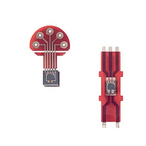
Pressure sensor – is a sensitive element that reacts in a certain way to pressure changes. That is, the applied pressure directly changes the properties of the sensor (capacitance, resistance, etc.) and thus, we obtain information about this pressure.

The picture shows a plate with piezoresistive pressure sensors

Pressure transmitter – this is the most common and comprehensive term. Many specialists include pressure switches (pressostats) among pressure transmitters, i.e. devices whose task is not to output the pressure value, but to trigger On/Off contacts when certain preset pressures are reached. Sometimes you can even find specialists who call manometers pressure transmitters.
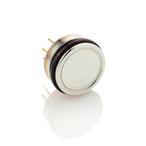
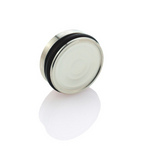
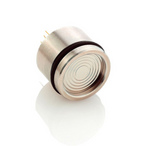
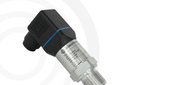
But what is the most correct definition of pressure transmitters? From our point of view, a pressure transmitter is a device ready to measure pressure. That is, a device containing a pressure sensor, having a housing with the possibility of mounting in the process and electrical leads in the form of pins, wires, or even special electrical connectors.
The pictures show:


On the left – absolute pressure transmitter with a special flange for welding
On the right – differential pressure transmitter, the transmitter is mounted using sealing rings
GSM water pressure transmitters are an indispensable technology for automating water supply management systems. Thanks to these devices, it is easy to monitor water pressure and reduce resource consumption, which in turn leads to economic benefits.
What are GSM water pressure transmitters?
GSM water pressure transmitters are modern electronic equipment designed to monitor water pressure in pipelines. Through the GSM telephone network, the transmitters send information about water pressure to a server, where it is processed and displayed to the operator. This information can be used to make decisions to optimize the water supply system's operation.
A GSM water pressure transmitter is a device that can measure pressure indicators and convert them into a standardized signal. These devices are equipped with a built-in battery, allowing their use in locations without an electrical network. Unlike a manometer, the transmitter not only measures pressure but also controls the maintenance of set parameters, making it much more convenient to use.
Transmitters designed to monitor water pressure are used in water supply systems as well as in heating systems where water is used as a heat carrier.
GSM water pressure transmitters are installed at a specific section of the pipeline where they can monitor water pressure. When the pressure in the pipeline changes, the transmitters send information to the server, which then processes the data and displays it on the monitor screen.
If you use the transmitter to monitor the heating system, it can help prevent overloads and water hammer. And transmitters installed at pumping stations can reduce equipment loads, extend the station's service life, and ensure smooth startup.
However, when choosing a GSM water pressure transmitter, attention should be paid to parameters such as: pressure measurement range, type of connection (power supply or battery), operating temperature range (considering equipment operating conditions), measurement accuracy (which can vary from 0.5 to 1 percent), measurement frequency, and the possibility of individual settings. It should also be noted that the more complex the water supply and heating system, the more accurate the measurements should be, so when choosing a transmitter, it is not worth saving on quality to get the most accurate and effective result.
Applications of GSM water pressure transmitters
Thanks to GSM water pressure transmitters, water consumption can be reduced and the operation of the water supply system optimized, lowering the risk of accidents and increasing system productivity.
In industrial facilities: GSM water pressure transmitters can be used in industrial facilities where it is important to monitor and optimize the water supply system's operation.
- In the agro-industrial complex: GSM water pressure transmitters can be used in the agro-industrial complex to monitor and optimize irrigation system operation.
- In private homes: GSM water pressure transmitters can be used in private homes to monitor and optimize the water supply system's operation.
The GSM water pressure sensor technology is indispensable in automating the water supply control system. These sensors allow monitoring of water pressure and reducing resource consumption within the ASCUV system, leading to economic benefits. They are widely used in various sectors of the economy, such as industry, agro-industrial complex, and private homes. If the task is to optimize the operation of your water supply system and increase its performance, it is necessary to use GSM water pressure sensors.
What is a pressure transducer
Pressure transducer – is a device for measuring pressure, having a standardized output signal, either analog (4…20mA, 0…10V, etc.) or digital (RS485, CAN, etc.). For consumer convenience, pressure transducers have threaded or flanged connections.


How to choose the right pressure transducer? Read our article.
_80x0_e6f.jpg "Pressure Transmitter Series 23SX-H2")
1)_80x0_e6f.jpg "Happy Defender of the Fatherland Day!")
_80x0_c25.jpeg "Radar Level Meter IZMERKON RL 37")