


When choosing a suitable pressure sensor for certain applications, in addition to the measured pressure range and temperature conditions, there are many criteria to consider. Among them is material compatibility: the housing and process connection must withstand the effects of the measured medium and the environment to ensure the sensor operates for a long time.
Therefore, when selecting materials, two important conditions must be taken into account. On one hand, chemical resistance to the measured medium. Another factor is that preventive considerations also play an important role. It is necessary not only to determine whether the pressure sensor will remain operational for a long time but also to establish whether the materials used in the pressure sensor itself could become hazardous when in contact with specific substances. The most obvious example is the pharmaceutical industry. Below we will show what incompatibilities arise, with which materials, and what solutions may be available.
Chemical and physical compatibility of the measured medium with the sensor's sealing material and cable.
 When selecting compatible materials, it is necessary to consider not only the material of the device housing. Other elements of the pressure sensor also come into contact with the environment and the measured medium, and these materials must also be taken into account.
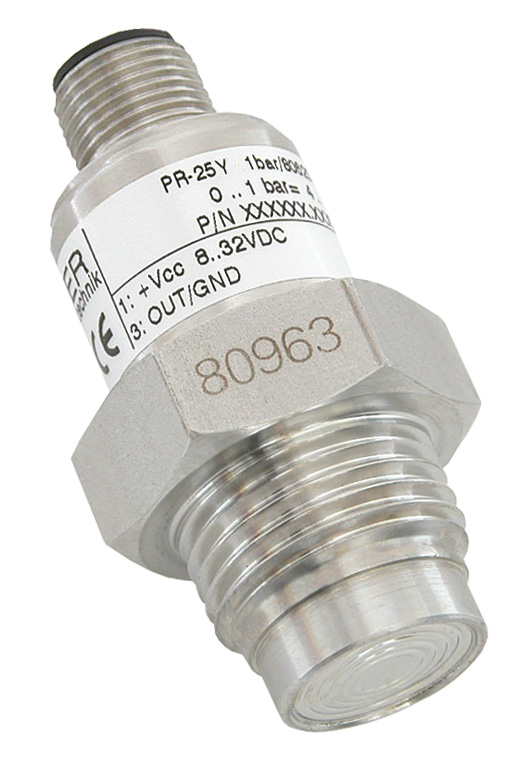
 Most pressure sensors are supplied with elastomer seals. The problem here is that the elastomer can dissolve when it comes into contact with aggressive media, such as biodiesel. In this case, a sensor with an open diaphragm that does not require elastomer seals should be used, for example, the 25Y.
Another vulnerable element is the cable used to transmit measurement data. An example is the use of a submersible probe in a swimming pool. For hygiene reasons, chlorinated water is used in pools. Standard submersible probes use cables made of PE or PUR materials. Although chlorinated water itself does not pose a problem for these cables, chlorine vapors rising from such water significantly affect the cable condition, as they are more aggressive than the water itself. The part of the cable above the water level will become porous over time (noticeable by white discoloration), and then water will penetrate inside. Subsequently, the sensor itself will also fail. For this reason, PTFE (Teflon) cables should be used.
Chemical and physical compatibility of the measured medium with housing materials:
Viscous media.
In the case of viscous media, such as liquid paints, deposits in the sensor's measuring channel can cause pressure sensors to fail. To prevent contamination, sensors with open diaphragms should be used for such applications so that the sensor can be easily cleaned.
Abrasive materials.
When pressure sensors come into contact with abrasive media such as concrete, a simple stainless steel diaphragm provides insufficient protection. In this case, a diaphragm made of Vulkollan® is required.
Galvanic and acidic liquids.
 A pressure sensor with a chrome-plated housing may look better aesthetically, but in some applications, this can interfere with normal operation. When a device with a metal housing is used in a galvanic bath, over time its housing will be damaged to the extent that the sensor will stop functioning. Even acidic liquids, such as sulfuric acid, react with metals. For this reason, sensors with plastic housings have been specially developed for use with galvanic and acidic liquids, for example, the DCX-25. The most popular solution here is PVDF (polyvinylidene fluoride).
Seawater.
Saltwater (depending on its salinity) causes long-term localized corrosion of stainless steel housings. For such media, most submersible pressure and level sensors are available in titanium versions.
Open waters / lightning protection.
Lightning strikes cannot be described as an environment, but this factor must also be considered. If lightning strikes the sensor directly, no protection will save it; however, surge protection may be recommended for submersible probes used in open waters. This can prevent excessive voltage and damage to the measuring device in the event of a lightning strike nearby. This is especially advisable when conducting long-term measurements in remote locations. Then, replacing a faulty device will be much more expensive than the surge protection itself.
Strongly oxidizing gases and liquids.
When oxidizing gases and liquids come into contact with oils or lubricants, there is a risk of explosion. All components exposed to the environment must be degreased and cleaned of oil and grease. It is also necessary to choose a sensor filling with a special oil that does not react with oxidizing gases and liquids in case of membrane damage.
Food and pharmaceutical enterprises.
In this case, silicone oil must be replaced with food-safe oil to prevent any contamination harmful to health or causing other negative effects. For example, beer that comes into contact with silicone oil will no longer foam, and no one will want such beer.
Conclusion:
The optimal design of the pressure sensor for a specific application depends on many factors. For this reason, a deep understanding of the intended operating conditions is required. Specialists at Izmerkon will select a device tailored to your goals, taking into account the specifics of the final application.
_80x0_e6f.jpg "Pressure Transmitter Series 23SX-H2")
1)_80x0_e6f.jpg "Happy Defender of the Fatherland Day!")
_80x0_c25.jpeg "Radar Level Meter IZMERKON RL 37")