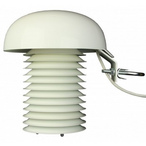



Measuring air temperature in meteorology is a complex task. Accurate air temperature measurements require minimizing local effects (such as trees and buildings) and minimizing environmental effects that influence the actual temperature determination at the sensor location.
The World Meteorological Organization – WMO defines air temperature at the earth's surface internationally as "the temperature shown by a thermometer exposed to the air in a place sheltered from direct solar radiation" (WMO, 1992).
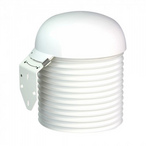
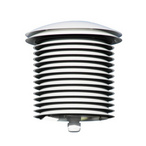
The main functions of screens are to protect the sensor from direct or indirect solar radiation during the day and from sensor radiation at night, as well as to protect the sensor from wetting. But protection from radiation and wetting conflicts with the screen's need for ventilation. Due to insufficient ventilation, a microclimate is created inside the screen. In fact, all screens create their own microclimate, and the difference from the surrounding environment's climate depends on the type and design of the screen.
It can be stated that the larger the volume of the screen, the more the measured temperature inside the screen deviates from the actual air temperature. From the above, it follows that thermometer screens should have high reflectivity to minimize heating of the plates and subsequent heating of the air as it flows over the plates to the sensor. The radial distance between the plates should be as small as possible to reduce the air contact time with the plate. To prevent the development of a microclimate inside the screens, blocking of the surrounding air flow by the screen should also be minimized by maximizing the distance between the plates as much as possible, taking into account the requirement to prevent sensor wetting. Any thermometer screen design is a result of compromises.
Finding the optimal design is a serious task that may require the use of various methods to study screen behavior. In field conditions, the actual differences between the air temperature inside screens and the ambient air temperature mainly depend on prevailing weather conditions. Additionally, ground conditions and soil moisture will also affect the air temperature inside the screen, as radiation or reflection will cause screen-dependent shifts. This can easily occur in areas with snow cover or in deserts.
 Meteorology
COMET sensors together with Cometeo protective screens are the ideal foundation for weather stations and long-term monitoring of weather, climate, and air.
 Snow Guns
 Building Management
Our instruments for measuring temperature, humidity, atmospheric pressure, and CO2 are an integral part of these industry-leading solutions.
_80x0_e6f.jpg "Pressure Transmitter Series 23SX-H2")
1)_80x0_e6f.jpg "Happy Defender of the Fatherland Day!")
_80x0_c25.jpeg "Radar Level Meter IZMERKON RL 37")