





More than one billion car tires are produced worldwide every year. Tire factories are among the largest consumers of natural rubber on the market. To give rubber the correct shape and provide it with proper wear resistance, it is extremely important to maintain the correct high pressures and temperatures. The use of high-precision and stable sensors during the process is the key to success.
One might think that tire manufacturing is a simple process – pour rubber into a mold, cool it, and the tire is ready, but in reality, the modern tire production process is much more complex.
Tire production – the first steps to blanks
The first stage is the production of blanks for vulcanization. The composition of the blank can vary both from manufacturer to manufacturer and from one tire model to another. More than 40 different materials can be involved, such as rubber, technical carbon, sulfur, etc. The final composition is mixed at extremely high temperatures. Then the resulting mixture is stretched and cooled, after which the blank can be used in further production stages.
Various tire components are made on a similar principle. The materials of the layers can be quite diverse, for example, a rubber layer reinforced with a steel mesh, which increases tire stability and provides enhanced centrifugal force resistance. Typical tire components include the carcass, tire bead, tread, sidewall, core, and inner surface.
Individual tire layers are combined using a special tire assembly machine. The assembled combinations of all layers are called blanks or "green tires."
From blank to finished tire

At the next stage, the blanks are placed into a vulcanization press. At this point, the individual tire components are vulcanized together, and the material reaches the required elastic consistency. To achieve vulcanization, the blank is "baked" in the press under specific pressure and high temperature.
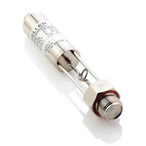
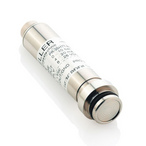
During this process, a rubber bladder is inflated inside the press and pushed outward under pressure into the mold. This creates the tire profile. The temperature here reaches 180 °C, and pressure can exceed 24 bar. The inflation pressure during tire vulcanization is one of the most important parameters affecting the quality of the final product. To measure this parameter, a reliable and accurate sensor capable of withstanding such extreme operating conditions is required. Many vulcanization machine manufacturers prefer Keller sensors from the 35X HTC series. The piezoresistive high-temperature 35X HTC transmitter can operate at temperatures up to 300°C. Pressure acts on a flat membrane and is then transmitted through an oil-filled capillary to a silicon sensing element. The capillary is designed as a spiral and functions as a radiator. When the measured medium at 300°C contacts the membrane, the temperature of the sensing element increases only to 100°C. Built-in electronics provide an amplified output signal in current or voltage proportional to the pressure. For extremely aggressive media, KELLER offers various membrane material options.
Vulcanization only with high-performance pressure transmitters
/35xht_1.jpg)
Tire production involves harsh conditions for equipment – there are always high temperatures, steam, and high pressure. Therefore, a pressure sensor that can maintain reliability and stable accuracy under these conditions is necessary. The 35X HT(T) series transmitters perfectly handle these tasks. Their high accuracy, reliability, and outstanding stability, as well as their compact and resilient design, ensure efficiency. The 35X HT and 35X HTT sensors are piezoresistive pressure transmitters for bioreactors and autoclaves. These devices, with special electronics in their housings, can operate indefinitely at temperatures up to 150°C. The transmitters are available in versions for measuring absolute and relative pressures with analog output signals in current or voltage. The sensor element is a highly sensitive silicon microchip. An independent temperature sensor is also integrated into the design. Their outstanding qualities throughout the entire process prevent costly downtime. Additionally, these pressure sensors can be easily calibrated on-site.
_80x0_e6f.jpg "Pressure Transmitter Series 23SX-H2")
1)_80x0_e6f.jpg "Happy Defender of the Fatherland Day!")
_80x0_c25.jpeg "Radar Level Meter IZMERKON RL 37")