








 Insufficient drying of plastic granules before injection molding can have various negative effects on the final product. For example, processing overly moist plastic granules can cause both product quality issues and problems with the injection molding process itself.
Depending on the type of plastic, plastic granules can absorb moisture during transportation and storage. Many types of plastic are good moisture absorbers. Water vapor can even penetrate the molecular structure of the plastic; this phenomenon is referred to as "internal moisture." In this case, the influence of the environment is most significant, so the moisture content in plastic granules can vary depending on the season.

Moisture accumulates in the pores and on the surface of the granules, which can lead to quality problems during subsequent plastic processing in the injection molding process. For example, defects such as streaks, weld lines, or bubbles on the surface or voids inside the product may occur. Since it is impossible to see defects inside the finished product, conducting quality checks, which are time-consuming, is impractical.
Excess moisture in the granules due to improper drying can negatively affect the injection molding process itself, causing phenomena such as steam or foam formation, difficulties filling the mold, and viscosity issues. Equipment and mold malfunctions may also occur, potentially leading to production stoppages in the worst case.
The necessity and cost-effectiveness of drying plastic granules are driven by increasing quality requirements for plastic products. Dew point temperature values below the optimal range of -30...-60°C are impractical for drying and can lead to additional costs. However, dew point temperatures above -15°C are also undesirable, as the appropriate drying effect is not achieved.
Previously, moisture levels were controlled by sampling and sending samples to a laboratory. Now, CS Instruments GmbH & Co. KG offers more advanced solutions for this task. Plastic granule dryers can now be equipped with dew point sensors that continuously monitor the dew point temperature. In case of dryer problems, the sensor can trigger an alarm, or other settings can be used. CS Instruments also offers a mobile dew point sensor specially designed for such applications, which can be easily used at different measurement points.
We recommend the following products:
 1) DP 510 - portable dew point sensor with the ability to connect third-party sensors
Has all the functions of the DP 500 sensor, plus an additional freely assignable input for third-party sensors.

2) Measuring chamber for granule dryers
Suitable for use in the pressure range -1...16 bar
 3) FA 510/515 - dew point sensor for adsorption dryers
Measures residual moisture after adsorption/membrane dryers in the dew point temperature range from -80 to 20 °C.
New: with Modbus-RTU interface.
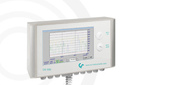
 4) FA 500 - dew point sensor with built-in display and signal relay
Measures dew point temperature in dryers of any type.
Have questions or need advice on selecting equipment for your production? Contact the specialists at "Izmerkon" — we will help find the optimal solution for your needs.
_80x0_e6f.jpg "Pressure Transmitter Series 23SX-H2")
1)_80x0_e6f.jpg "Happy Defender of the Fatherland Day!")
_80x0_c25.jpeg "Radar Level Meter IZMERKON RL 37")


-min_146x146_c23.jpg "Стрелка")


