


The 2016-2017 flu vaccination campaign is already in full swing. Since August, mobile laboratories have been stationed near metro stations in St. Petersburg, Moscow, and other cities, where you can get vaccinated against the upcoming seasonal flu. Posters encouraging people to protect themselves from the flu are displayed in clinics, schools, universities, and other social institutions.
 According to the head of the Ministry of Health, V. Skvortsova, this year the vaccination system is even more thoughtful and structured; today all vulnerable population groups are unconditionally provided with the vaccine. The minister also reported that all vaccines currently used against the flu are domestically produced drugs that proved their effectiveness last year. The vaccines also correspond to the flu strain expected this year in Russia.
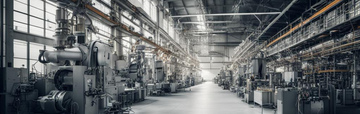
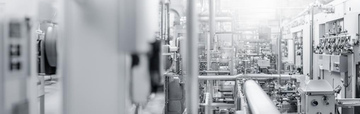
Do you know under what strict conditions vaccines, as well as other pharmaceutical products, are developed? The rooms where vaccine development and production take place are called clean rooms or clean areas. A clean room is a room where the size and number of particles such as dust, microorganisms, aerosol particles, and chemical vapors in the air are maintained within a specified range per cubic meter. In other words, a clean room is a space where special air cleanliness (sterility) requirements are imposed. If necessary, parameters such as temperature, humidity, and pressure can also be controlled in the clean room.
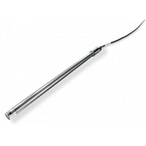
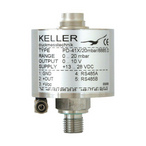
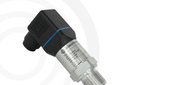
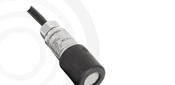
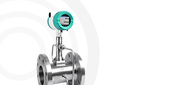
 The main principle of ensuring cleanliness is creating positive pressure in the clean room relative to adjacent rooms. This is achieved by creating an air imbalance, that is, the difference between the amount of supply and exhaust air. Control of positive pressure was traditionally ensured by precise differential pressure sensors such as the PD-41X. However, recently, more universal and accurate air velocity sensors operating on the principle of thermal anemometers (thermal anemometric flow meters) are increasingly used in clean room design. An example of such devices is the SS 20.400 sensor, capable of monitoring the speed of supply and exhaust air, thereby ensuring proper cleanliness conditions in the room.
 Specialists from the "Izmerkon" company will help you select thermal anemometric flow meters to create the ideal climate in your clean room. With a properly selected air flow sensor, the task of controlling air inflow and outflow will be easily solved. If you are looking for thermal anemometric flow meters for clean room design, we will be glad to assist you. If you want to study information about our flow meters independently, we invite you to the corresponding section of our catalog.
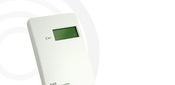
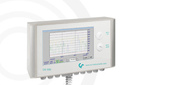
For controlling and regulating other parameters in the clean room, such as humidity and temperature, we can offer you humidity and temperature sensors, as well as data loggers. Read more about this on our website in the Applications section, and also follow our news.
Best regards,
The editorial team of "Izmerkon" magazine
_80x0_e6f.jpg "Pressure Transmitter Series 23SX-H2")
1)_80x0_e6f.jpg "Happy Defender of the Fatherland Day!")
_80x0_c25.jpeg "Radar Level Meter IZMERKON RL 37")