
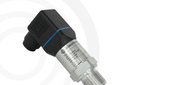
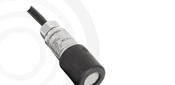
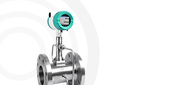

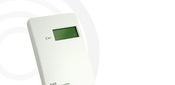
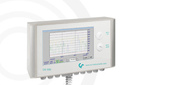


These devices are measuring instruments with sensitive elements that change physical parameters depending on the ambient pressure.
Unlike pressure gauges, which only measure pressure and display readings on a scale, pressure sensors also convert the obtained value into a standardized signal or digital code, which is transmitted through the technical system network and used to regulate the entire process.
Thus, sensors necessarily include not only a pressure receiver (sensitive element) but also devices for outputting the information signal. All joints and connections are sealed with hermetic fittings.
Classification of Pressure Sensors
Pressure sensors are classified according to several criteria. The first is the measured characteristic:
- Absolute pressure — the indicator in the measured medium relative to absolute zero (vacuum).
- Gauge pressure — the level of pressure increase in the medium relative to barometric pressure (in the Earth's atmosphere).
- Vacuum — the degree of pressure decrease relative to barometric pressure.
- Pressure/vacuum: it is possible to measure both increase and decrease relative to atmospheric pressure readings.
- Differential pressure: measures how much the readings differ in two different media or at two remote points in the process.
- Hydrostatic pressure: measures the difference between total and dynamic pressure, used for pipelines.
Another classification is by the method of pressure measurement:
- Height of liquid in a column. Pressure gauges with a calibrated scale filled with water or mercury operate on this principle. Water-filled gauges are considered more sensitive and accurate.
- Elastic deformation. The method is based on the correspondence that the degree of deformation of an elastic material is directly proportional to the applied force (pressure).
- Electrical methods. Strain gauges operate on this principle: a change in size affects the electrical resistance of the conductor.
Types of Pressure Sensors
Depending on all these characteristics, the following types of pressure sensors are distinguished:
- Elastic sensors are often used for measuring liquid pressure. They consist of a device with liquid in a compartment with one elastic wall. This flexible "membrane" deflects when readings change, and the value is calculated based on these deflections. Such devices are sensitive and fragile, and can be disrupted by vibrations.
- Bourdon tubes: pressure is applied inside the tube, causing its elastic deformation (an ellipse or oval cross-section tends to take the shape of a circle, and the free end of the tube moves). Most often, dial pressure gauges operate on this principle. These are portable models, low-maintenance, but operate with low accuracy and are suitable only for static measurements.
- Bellows: cylindrical devices with folds that deform when compressed or expanded. Such devices are connected to switches and can only be used at pressures below 200 Pa.
- Membranes and diaphragms are rubber, metal, plastic, or leather discs. They are sensitive to sharp pressure changes and suitable for measuring low values, less than 2-7 Pa. They can also be used in aggressive environments.
- Electrical sensors are installed alongside elastic ones, increasing measurement accuracy and providing transmission of an electrical signal to the control point.
- Capacitive sensors consist of parallel capacitor plates connected to a metal diaphragm. The design also includes electrodes powered by a high-frequency generator. Suitable for measurements in the range of 2.5-70 MPa.
- Inductive sensors with a ferromagnetic core, coils, and an elastic element. The core moves when pressure changes, and the voltage between the coils also changes. Depending on the calibration voltage and type of elastic element, the measurement range can vary from 250 Pa to 70 MPa.
- Magnetoresistive sensors. They consist of a design with a ferromagnetic core, plate, and flexible element. When these move, the magnetic flux in the circuit changes. Measurement sensitivity in this case is 0.35 MPa.
- Piezoelectric sensors with a crystal sensor that generates an electric charge when it senses pressure. There is a direct correlation between changes in these values, so the device is sensitive with fast response time (low response time). Sensitivity is also at the level of 0.1 MPa, and the upper measurement limit is 100 MPa.
- Potentiometric sensors are equipped with a lever attached to an elastic sensor. When the elastic element deforms, the lever moves along the potentiometer, thereby providing resistance measurement. Such sensors operate with low sensitivity and are not suitable for continuous use in critical processes.
- Strain gauge sensors: pressure changes are determined by calculating the resistance fluctuations of a Wheatstone bridge circuit. Sensor sensitivity remains high only under stable process temperatures. Measurement range is up to 1400 MPa with sensitivity of 1.4-3.5 MPa.
- Vibration (with a vibration element). In this case, changes in the resonance frequency of vibrating elements are measured, and the sensor itself is located in an isolated cylinder under vacuum. Such devices are suitable for measuring stable values without sharp jumps and are practically unaffected by temperature. The allowable measurement range is up to 0.3 MPa.
- Differential pressure: the pressure difference is measured, and this value is converted into a transmitted signal. It is used in conjunction with a capacitive element or diaphragm and is considered minimally invasive. The sensitivity and range of measurements depend on the specific electrical and elastic elements used in the design. Most often, such devices are used to measure value differentials.
- Vacuum or vacuum gauges operate at pressures below atmospheric, in a vacuum, or at extremely low values.
- Thermal sensors operate on the principle of vacuum gauges, where gas thermal conductivity changes due to pressure. The principle used in this type of sensor is the change in gas thermal conductivity under pressure. Such sensitive elements only work at low pressures.
- Ionization devices can have either a hot or cold cathode (differing in the principle of electron emission). Such devices are considered very sensitive and suitable for measuring fractional parts.
Devices with varying degrees of sensitivity are also produced. Some operate with minimal error but require more time to conduct measurements. They are advisable to use where pressure indicators in the system are stable. If this value changes significantly over a short period, it is decided to "sacrifice" accuracy in favor of measurement speed.
Areas of Application for Pressure Sensors
Pressure sensors, as devices that convert the measured value into a standardized digital signal, can be used in housing and communal services, manufacturing (chemical, food, petrochemical, mechanical engineering, metallurgy, shipbuilding, energy), and for laboratory experiments.
In housing and communal services and everyday life, such devices are installed in heat metering systems and automatic control of engineering networks. Most models are universal and designed for use in liquid, gaseous, and chemically aggressive environments. Differential pressure sensors are often used in process control systems (in filters, pumps, open and closed tanks), and devices measuring pressure differences are widely used in the energy industry enterprises.
Pressure Sensors in Manufacturing
Pressure sensors play a key role in various industrial processes, providing control and management of technological system parameters. Their use in manufacturing can be divided into several main areas:
1. Process Control
-
Chemical and Petrochemical Industry: Pressure sensors are used to monitor pressure in tanks, pipelines, and reactors to prevent explosions, leaks, and ensure safe operating conditions. For example, in high-pressure reactors, it is important to maintain a certain pressure level to optimize chemical reactions.
-
Energy: In steam boilers and turbines, measuring steam pressure is critical for maintaining equipment efficiency and safety. Sensors help control boiler pressure, preventing it from exceeding permissible limits.
2. System Management
-
Water Supply and Sewerage: Pressure sensors help control pressure in water pipelines and pumping stations, ensuring even water distribution and preventing accidents caused by pressure fluctuations.
-
Pneumatic and Hydraulic Systems: In these systems, pressure sensors are used to monitor and regulate the pressure of working fluids and gases, allowing stable operation of equipment such as hydraulic presses, lifts, and other mechanisms.
3. Safety and Occupational Health
-
Emergency Protection Systems: In some industries, pressure sensors play a key role in emergency shutdown systems when parameters exceed permissible limits. This is especially important in enterprises working with hazardous substances or under high pressure conditions.
-
Leak Detection: Pressure sensors are also used to detect gas or liquid leaks in pipelines, enabling prompt response to problems and preventing accidents.
4. Metallurgy and Mechanical Engineering
-
Melting and Rolling Mills: In metallurgy, pressure control in gas or oil supply systems to equipment is necessary to ensure product quality and production process safety.
-
Automobile Manufacturing: In mechanical engineering, pressure sensors are used in control and management systems of production lines, for example, to check the tightness and pressure in various components such as tires and hydraulic systems.
5. Food and Pharmaceutical Industry
-
Sterilization and Pasteurization: Pressure sensors are necessary to control sterilization and pasteurization processes, where precise maintenance of pressure and temperature is critical for product quality.
-
Packaging Lines: In production lines, especially in pharmaceuticals, pressure sensors are used to monitor packaging tightness and ensure product quality.
The use of pressure sensors in manufacturing is not limited to the areas listed. They are an important element in any technological process where pressure needs to be controlled, ensuring safety, efficiency, and production quality.
Criteria for Choosing Pressure Sensors
When selecting the appropriate device, be sure to consider:
- installation location, type of technological process and equipment;
- measurement range;
- type and temperature of the transported medium;
- type of standardized output signal;
- required measurement accuracy (the more critical the technological process, the higher the accuracy needed).
The company «Izmerkon» offers the most in-demand pressure sensors, transmitters, recorders, sensors, and pressure transducers with high accuracy. Digital manometers can also be purchased here.
All this is the product of the Swiss company KELLER. Such equipment is characterized by high accuracy, stability, reliability of electrical connectors, and technological connections. To select the appropriate measuring device according to the requirements of the technological process and equipment, simply leave an online application or request a callback.
_80x0_e6f.jpg "Pressure Transmitter Series 23SX-H2")
1)_80x0_e6f.jpg "Happy Defender of the Fatherland Day!")
_80x0_c25.jpeg "Radar Level Meter IZMERKON RL 37")


