





 Pressure – one of the key thermal engineering quantities, the most important parameter of many technological processes.
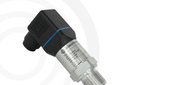
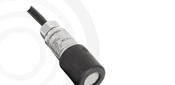
Pressure transducers are designed for measuring and continuously converting pressure into a standardized output signal of direct current or voltage.
Transducers are used in regulators and other automation devices in systems of automatic control, regulation, and management of technological processes in water treatment, heating, ventilation, and air conditioning systems; hydraulic systems, refrigeration equipment, flow meters and counters; diesel engines; braking systems; level meters, in test stands, etc.
Industrial measurements and control and measuring instruments are used in all areas of industry — from nuclear to food and pharmaceutical; accordingly, pressure transducers are needed everywhere.
The principle of operation of sensors is based on the elastic deformation of the sensitive element (sensor), on which semiconductor strain gauges are applied, connected in a Wheatstone bridge circuit. The measured pressure is supplied through a fitting into the working cavity of the sensor and causes deformation of the diaphragm. This leads to a change in the geometry of the resistors, which are in close mechanical connection with it, and a change in their resistance. The applied pressure (mechanical input) is converted into a change in resistance (electrical output).
Types of pressure transducers
Pressure transducers measure the difference between two pressures acting on the measuring membrane (sensitive element) of the sensor. One of these pressures is the measured one, the second is the reference pressure, i.e., the pressure relative to which the measured value is counted. Depending on the type of reference pressure, all transducers are divided into the following types.
Absolute pressure transducers
Designed to measure the absolute pressure of liquid and gaseous media. The reference pressure is vacuum. The air from the internal cavity of the sensor's sensitive element is evacuated. For example, a barometer is a special case of an absolute pressure sensor.
Gauge pressure transducers
Designed to measure the gauge pressure of liquid and gaseous media. The reference pressure is atmospheric; thus, one side of the membrane is connected to the atmosphere.
Differential (difference, drop) pressure transducers
Designed to measure the pressure difference of the medium and are used to measure the flow of liquids, gas, steam, and liquid level. Pressure is applied to both sides of the membrane, and the output signal depends on the pressure difference.
Hydrostatic pressure transducers
Designed to convert the hydrostatic pressure of the monitored medium into a direct current signal. They measure the pressure of a liquid column, which depends only on its height and the density of the liquid itself.
Vacuum pressure (rarefaction) transducers
Designed to measure the vacuum pressure of liquid and gaseous media. The reference pressure in these sensors is also atmospheric. However, unlike gauge pressure sensors, the measured pressure is less than atmospheric, i.e., there is a rarefaction relative to the atmosphere.
Gauge-vacuum pressure transducers
Represent a combination of gauge and vacuum pressure sensors, i.e., they measure both pressure and vacuum.
For reliable sensor operation, it is necessary to select materials for elements contacting the measured medium (membranes, flanges, and sealing rings) that are chemically resistant to these media. For example, for various operating media, the membrane material of sensors can be stainless steel, titanium, titanium alloy, ceramic, etc.
Pressure transducers also differ in climatic design. Attention should be paid to the climatic conditions (ambient temperature, humidity, direct exposure to water and sunlight) at the sensor installation site. They must correspond to those for which it is designed.
Pressure transducers have various metrological characteristics (accuracy classes) – usually from 0.05% to 0.5%. Highly accurate transducers are used at important facilities in various industries.
Some types of pressure sensors have explosion-proof designs. These models can be successfully used to determine pressure at hazardous sites with the presence of explosive and easily flammable gases and liquids.
Pressure transducers belong to measuring equipment and must undergo mandatory certification tests. After that, they are approved and entered into the State Register of Measuring Instruments.
_80x0_e6f.jpg "Pressure Transmitter Series 23SX-H2")
1)_80x0_e6f.jpg "Happy Defender of the Fatherland Day!")
_80x0_c25.jpeg "Radar Level Meter IZMERKON RL 37")


