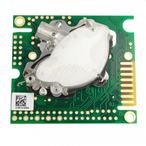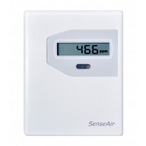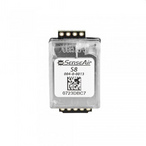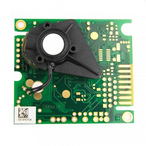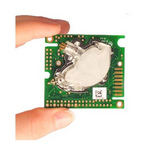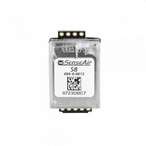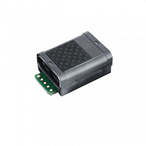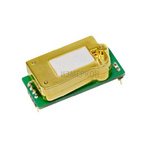





Non-dispersive infrared (NDIR) sensors are simple spectroscopic devices often used for gas analysis. The key components are an infrared source (lamp), a measuring chamber or light tube, a wavelength filter, and an infrared detector. Gas is pumped or naturally enters the measuring chamber, then the gas concentration is measured electro-optically by absorption of a specific wavelength in the infrared (IR) spectrum.

The IR beam is directed through the measuring chamber to the detector. An optical filter is installed before the detector, which absorbs all light except for a specific wavelength that can be absorbed by the molecules of the measured gas. Molecules of other gases do not absorb light at the selected wavelength, so they cannot affect the amount of light reaching the detector. The IR signal from the source is usually modulated or pulsed to prevent background thermal signals from causing unnecessary interference.
The measuring chamber must allow the infrared beam to freely reflect off the walls on its way to the detector, i.e., the quality of the measuring chamber coating directly affects the accuracy and durability of the device. Most sensors on the market use a multilayer gold coating, which has several drawbacks. SenseAir uses its own know-how in sensors — EQC coating, free from these drawbacks.
The intensity of the IR radiation reaching the detector is inversely proportional to the concentration of the target gas in the measuring chamber. When the concentration in the chamber is zero, the detector receives the maximum IR beam intensity. As the concentration increases, the intensity of IR radiation hitting the detector decreases. The Bouguer law describes the exact relationship between IR radiation intensity and gas concentration:
I = I 0 e kP
Where:
I = intensity of light reaching the detector
I 0 = intensity of light measured with an empty chamber
k = absorption coefficient of the measured gas
P = target concentration of the measured gas
NDIR sensors can be used to measure virtually all inorganic and organic gases, but they are most commonly used for measuring carbon dioxide, as no other measurement method works as simply, reliably, and accurately for this gas. It is also worth noting the long service life of devices using NDIR technology. For example, most SenseAir sensors have an expected service life of more than 15 years, and the manufacturer's warranty is 5 years. Also, thanks to the ABC self-calibration technology, SenseAir sensors require no maintenance, making them attractive for many applications.
Typical applications of NDIR sensors:
- HVAC
- Cycle control in self-cleaning ovens
- Monitoring automotive and flue gases
- Greenhouses, agricultural complex
- Data collection for warning systems in hazardous areas
- Gas leak detection
- Landfill gas level monitoring
- Breath alcohol testers
If you need an accurate, durable, and reliable device for determining CO2 concentration, you should definitely choose a sensor operating on NDIR technology. Our catalog includes both ready-made sensors and OEM solutions. For additional technical questions and purchasing inquiries, please contact our specialists.
_80x0_e6f.jpg "Pressure Transmitter Series 23SX-H2")
1)_80x0_e6f.jpg "Happy Defender of the Fatherland Day!")
_80x0_c25.jpeg "Radar Level Meter IZMERKON RL 37")